These days there are a lot of handy-talkies (HTs) being produced from China that are selling like crazy because in part they are so inexpensive. It caters to the amateur radio operator on a budget. I myself own 4 and purchased 8 for some kids in my daughter's school radio club for when some of the students get their license.
I find it rather ironic that 20 years ago, a lot of the "old timers" in ham radio were saying that the expense of the hobby was going to kill ham radio, how $200 HT's and $300 mobiles and $500 HF rigs were going to suck the life out of the hobby and that it was going to deter new hams from coming in.
Now, those exact same hams are complaining that these "cheap Chinese radios" are going to be the downfall of the hobby, allowing any Tom, Dick, and Harry to get on the air and cause chaos and havoc. So which is it, "expensive and a deterrent", or "cheap and all-inclusive"?
It does seem like the VHF and UHF bands are growing with new hams getting the Baofengs/Pofungs, Wouxuns, Anytones, TYTs and Jetstreams...but to me, if it keeps the bands active and encourages new hams, and especially young hams, into getting on the air, then let them have at it. To me at least, there's not a difference in quality of the signal (although programming the radios can be a bear without the cable and software). Typically, as long as you're not talking about what kind of radio you are using, then it doesn't matter what kind of radio you're on, does it? Ignorance often is bliss.
The big reason I bought the Wouxun KG-UV2D was the fact that it had 220 MHz (1.25 meter) capability. Until then, getting a 220 MHz radio was an expensive endeavor. I had not seen a 220 MHz radio selling for less than $200. And it seemed that the older the radio, the more "valuable" it was to the seller.
BridgeCom BCH-220
I have 2 of the Wouxuns and the biggest reason was that they offered 2m/220 dual band capability and at about $105 it was too good to pass up. Unfortunately 220 MHz is still a bit quiet.
Chances are the reason for the animosity about the "cheap radios" from some is the fact that they are made in China. While that can be a point of contention for some, the fact is that these radios are out there, people are buying them - and using them - and it's not really affected the bottom line of the heavyweights such as ICOM, Yaesu, and Kenwood, at least not as far as I can tell.
However, if you're interested in getting on 1.25 meters, and don't have a lot of cash to spare, and are really trying to keep in tune with "Made in the USA", then BridgeCom out of Missouri may just have the radio for you.
Due to be released in September, the BCH-220 is a single-band portable radio that should hopefully satisfy the ham who wants to get on 220 MHz on a budget, yet not have to "lower themselves" to purchasing from outside of the US. Current selling price is $80.
Although it appears to be just a monoband radio, it has 199 memories, tactile buttons to press, 2/5W power output, is durable and easy to carry, weighing 230 grams, or just over a 1/2 lb.
Below is a video from BridgeCom VP Tim King describing the radio.
It seems that US/China relations are a bit rocky for Import Communications, the distributor for Wouxun radios...until now.
PD0AC reports that Ed Griffin (W4KMA) at Import Communications has been unhappy with the support that the Wouxun - pronounced "Oh-sheng" - folks have provided (or rather haven't provided) concerning an issue with the HT's apparently losing their memories at random, among other issues. As a result, he's no longer selling new inventory of Wouxun radios and will be replacing them with AnyTone products, but still under the competitor's site's name.
The (less-than-flattering) message on Wouxun.us's web site
Griffin reports that the Wouxun dual-band models lose memory without warning and that he has replaced approximately 500 radios out of pocket because Wouxun refuses to honor warranties or fix the issue, or replace the defective radios.
What you see when clicking on the KG-UV6D page on Wouxun.us
When you go to Wouxun.us you get a couple of less-than-flattering messages with a message stating that Wouxun radios will no long be sold, but accessories will. The prices that are supposedly "closeout" are about the same prices I paid when I bought my 2 KG-UV2D radios at 2 different hamfests.
While there is no clear distinction as to whether the memory issue is exclusively with the handheld radios or also with their mobile radios, I did notice that the dual-band mobile is no longer offered on the Wouxun.us site. The high price might have had a bit to do with that. Considering the relatively low price of the HT's, I thought that the dual-band mobile radio would have been under $200, but the $360+ price tag kept me away. I could buy plenty of other mobile radios for a lot less. Their quad-band mobile is also not appearing on the site, although the KG-UVA1 dual-band amateur/public service radio is still being offered, as is the KG-703E single-band VHF radio.
While I can sympathize with Griffin if indeed the radios are defective, the graphics used on the site are a bit over the top when trying to make a statement. But then again, I probably would be doing the same thing if the Chinese counterparts I relied on for service and support were treating me the same way.
PD0AC updated that a European distributor of Wouxun radios sold about 500 radios and only had 1 radio with the issue that Import Communications is reporting.
Wouxun came onto the scene a few years ago offering new radios at
remarkably low prices, about $110 give or take $10. However, the last few hamfests I've attended,
nary a Wouxun was in sight, replaced instead by an even lower-priced Baofeng
radio series that has been offering many of the same features for about
$50. The only reason I didn't buy one was because they had 2m/440, and
not 2m/220.
I own 2 of the KG-UV2D radios with 2m/220 capability and the only problem I've encountered has been that one of the battery packs is now not holding a charge. Other than that I've had no issues with the radios. I don't know if this is isolated to a certain batch of radios that came of the assembly line or with an entire product line, but as this plays out I'm sure we'll find out more about this issue.
I hope everyone had a happy Memorial Day weekend. It's good to take pause and remember that many brave men and women paid the ultimate price for all of us Americans to freely express ourselves and enjoy the lives we live day in and day out.
I decided to take the family up into the mountains and watch a sunset from Clingman's Dome in the Great Smoky Mountains National Park Monday. We were supposed to go on Sunday but plans didn't work out (as they never do with me!).
When we got I pulled out my trusty Wouxun 2m/220 radio and attempted to make some contacts on 6.52 simplex but, unlike 2 weeks ago when I went up to "the Dome", there was no one willing to talk.
As I trekked up the steep path to the overlook I made a couple of quick QSOs with locals on a repeater, and stowed my radio for use from the observation tower. As we got to the base of the ramp leading up to the tower, I looked up and saw a rotatable dipole jutting out from the side of the dome. I quickly realized someone else on the tower had a ham ticket and was tearing it up on HF!
W3FF Buddipole
I got to the top and met up with Lynn, KJ4ERJ who was visiting from Florida. I asked about his operation and he told me he was working "SOTA", or "Summits on the Air". It was the first I've heard of such a program (even though I've been a ham for 18-1/2 years) but sounded very interesting.
I was offered a chance to operate but declined. I was having enough fun enjoying listening to the contacts coming in from New Mexico, New York, Florida, Arizona, and New Jersey on his Yaesu FT-817.
I tried simplex again and wasn't successful. I made a couple more repeater contacts and stayed long enough to realize that the sunset I had hoped to view was lost to the clouds off to the west.
Lynn and his son Paul, KJ4DXK were hammering out contact after contact on the rotatable dipole (set up for 20m meters) and I had to find out more about the antenna. I discovered it was a "buddipole" and watching it in action showed its value, as Paul and Lynn continued to rack up contact after contact on 2.5W, getting 5/9 reports from almost everyone.
KJ4ERJ working a contact on 20m
I tried to drum up a few contacts for them by sending a message to my Twitter account, but I forgot, I'm on TOP OF A MOUNTAIN, and cell phone coverage didn't exist. Unfortunately I couldn't raise anyone on the repeaters in order to spread the word about their operation. Talk about bad timing!
Summits on the Air (according to their web site) is "an award scheme for radio amateurs and shortwave listeners that encourages portable operation in mountainous areas. SOTA has been carefully designed to make participation possible for everyone...There are awards for activators (those who ascend to the summits) and chasers." It sounds like something I need to investigate at some point. This may soon become another pet project!
The weather atop Clingman's Dome is some of the most hostile and unpredictable I've ever encountered. I've been up to the Dome numerous times, typically to stargaze after dark and on occasion to take my ham gear up and work some contacts, though it's typically on VHF. I've been up to watch meteor showers, join an astronomy party, and of course, enjoy the view. But you do need to dress warm for the trip. Memorial Day it was 95 degrees at my house, but when we got to the Dome, it was 60. And as the sun went behind the clouds to the west, the constant wind at the tower added a chill to the air that made us beat a hasty retreat back to the car.
One evening my wife and I ventured up to the Dome's parking area to watch a meteor shower, and it was one of the clearest views I've ever had of the stars. Then we go back a week later, and the weather in Knoxville is clear and dry, but high up on the mountain, when we arrived at Newfound Gap, just before getting onto the 7-mile road to the Dome, a thunderstorm brewed up from nowhere and made for a treacherous retreat from the mountain...back to a clear and dry Knoxville. More often than not, it's clear everywhere BUT the Dome, and when I arrive in the parking area, it's nothing but fog.
Still, going up to Clingman's Dome is well worth the trip. Whether it's to stargaze, enjoy the view, or work a few radio contacts, it's guaranteed to be an adventure.
I decided to go after all, and after scraping up a few bucks, took the family to the hamfest. I put up a couple of unused radios up for sale thanks to my friend Tim (KE4OTZ) who loaned me some tailgate space.
Lauren had a good time (playing her Nintendo DS), and even got lucky at the prize booth, having been selected for the first hourly prize. She won 4 PL-259 connectors. I'm sure I will...err...she will make good use of them...
I sold two radios. One was my Yaesu FT-50R (not the 90, like I originally posted before) and an out-of-order FT-5100 I had bought off eBay a few years ago. I'd always wanted the 5100 (or its sister, the 5200 with detachable faceplate) but when I picked up this radio, I had trouble from the start. It apparently had been modified to transmit and receive out of band, but the radio needed a sequence of buttons pressed in order to enable the radio to work in the modified state. To make matters more complicated, the onboard battery was dead, so if I shut the power off, it would reset into its original state, and the sequence would need to be repeated. This, among other things (like accidentally dropping it while trying to troubleshoot it, leading some of the buttons needed to enable to mod to be stuck), led me to sell it "for parts".
But it wasn't a complete sell-off, as I took the money made on the two radios and bought my second Wouxun KG-UV2D. I sold the FT-50R and bought the Wouxun instead for Lauren to use as her radio for a couple of reasons. One is that it was easier for her to use than the Yaesu, and also I could clone the two radios with the same memories and settings so that I can show her how to use the radio and to make it easier to find frequencies to talk on.
I also scored a killing on some old ICOM radios. I was told by Tim that a tailgater was selling some ICOM 220 radios for $10 so naturally I had to check it out. I went over across from Tim's table in the "boneyard" and the guy said he had not one, not two, but three IC-2AT's (2m HTs) and an IC-3AT (the 220 HT) for sale, along with a drop-in charger, and a couple of battery packs for $15. The catch: He hadn't used them in YEARS and didn't know if they still worked. I figured for $15 I'd take a chance.
But I think it was Amber who got away with the item of the day. One vendor was selling, of all things...purses. So naturally Amber HAD to have one...but these were not just any purse. They had interchangeable "skins" so that she can mix and match! The price was not that bad...for a purse. And it took some wrangling with mom and dad, along with promise after promise to take care of the animals, water the plants, clean the room, etc. But Jes and I had to reward her good grades in school, so we fell for it. I must say, over the last two weeks, she's been using it. And she's promised Lauren she'd have her time with it as well.
After getting home from the hamfest I decided to put the ICOM HTs to the test, so I plugged in the drop-in charger and the battery packs and waited...and waited...and waited...
I started with the IC-3AT. After all, it was the big prize in the stack. As soon as I turned on the radio, the sound of static crackled the radio back from it's long slumber. It works! On receive at least...
I quickly reacquainted myself with the settings of the "brick" and scoured for a repeater to key up. I anxiously spun the thumbwheels of the VFO at the top of the radio and keyed up. NOTHING. No kerchunk, no morse code ID of the repeater...just silence. I looked on the back of the radio near the belt clip and the damned thing was still on SIMPLEX. A quick flick of the switch over to "duplex" and and quick key of the mic, and I hear "daaah dit dit......dit......." as the repeater ID'ed over the transistor-radio-style speaker of my newly-found treasure.
The 2-meter IC-2AT's were not as fortunate. While they all power on and receive, they do not transmit, except one, but it was so scratchy and noisy, I gather it's not going to last much longer. Still, for $15, I snap up at least one gem out of the bunch!
Now, unlike these ridiculous "pickers" shows that are now infesting basic cable, I did not think about turning around and running a ridiculous profit and then bragging about it to ever-increasing audiences, and yes, before I hear about it, I've watched a few episodes. I knew my friend Jason (KF4VDX) was in need of a 220 radio and couldn't afford one, not even the Wouxun dual-bander I just bought. He was a recently appointed SKYWARN coordinator, and I knew he'd need one, since the National Weather Service office in Morristown was using 220 to coordinate with several of the regional net control stations.
So last Saturday, as we got together to prepare to go to a Field Day site, I brought the ICOMs out to him. He's been working odd jobs to repair radio equipment so I figured he might be able to make use of the "receive-only" 2 meters bricks, and he'd get a 220 radio to tinker with and hopefully get some mileage out of it. The least I could do, and the IC-3AT would get used rather than collect more dust in my house. To me, it was money well spent.
Overall it was a worthwhile hamfest. I got rid of a couple of radios I didn't need, bought one Lauren could use, and gave a good friend of mine some much-needed equipment for his hamshack.
If I go, I'm only after one thing, the Wouxun 2m/220 radio like the one I bought this past January.
I'm going to talk to Lauren and see if she wants to give up the Yaesu FT-90 I got for her and give her the Wouxun so that we both have the same radio. She just returned from a trip to Washington DC this past weekend and the only times I've seen her was after she got home from the trip on Monday and spent the evening telling us all about the trip before passing out as soon as she got home, and today she returned home late from swimming in this god-forsaken heat and once again passed out as soon as her head hit the pillow.
So hopefully I'll talk to her today. I'm certain she'd be open to getting another HT (she's not really spent any time with the Yaesu), but if she isn't, I really don't have a reason for attending this year. I'm pretty sure that Wouxun radios will be sold, and I would be looking for a copy of the SERA journal (I need to resubscribe) but that's really my only purpose.
Stay tuned.
UPDATE: Looks like I might take the whole family to this one...and get a Wouxun if I can snap one up!!!
UPDATE #2: Just realized I had the radio model wrong, it's an FT-50 (dual-band 2m/440, not the FT-90)
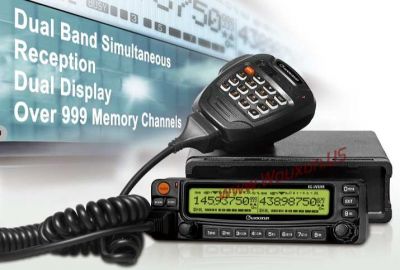
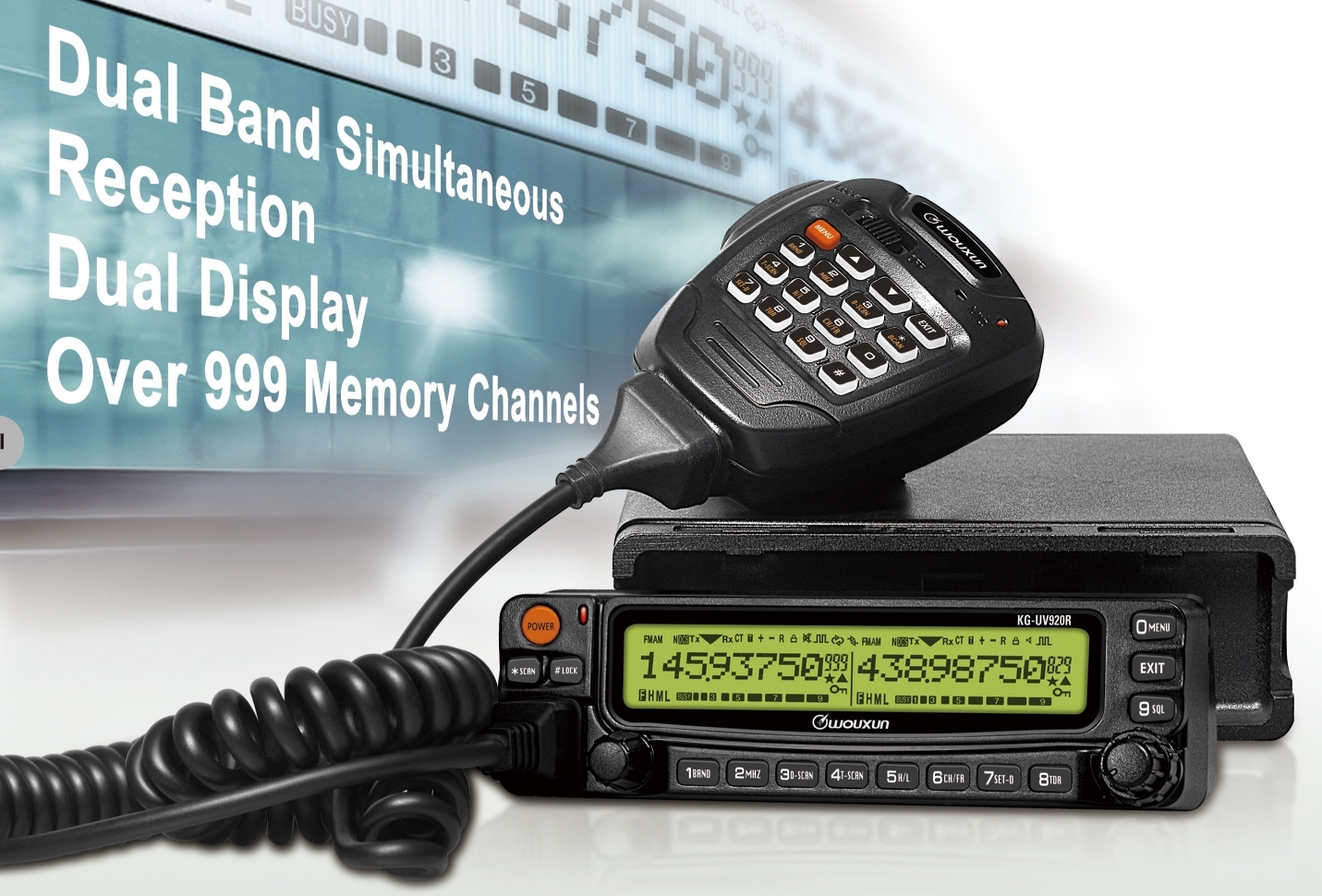
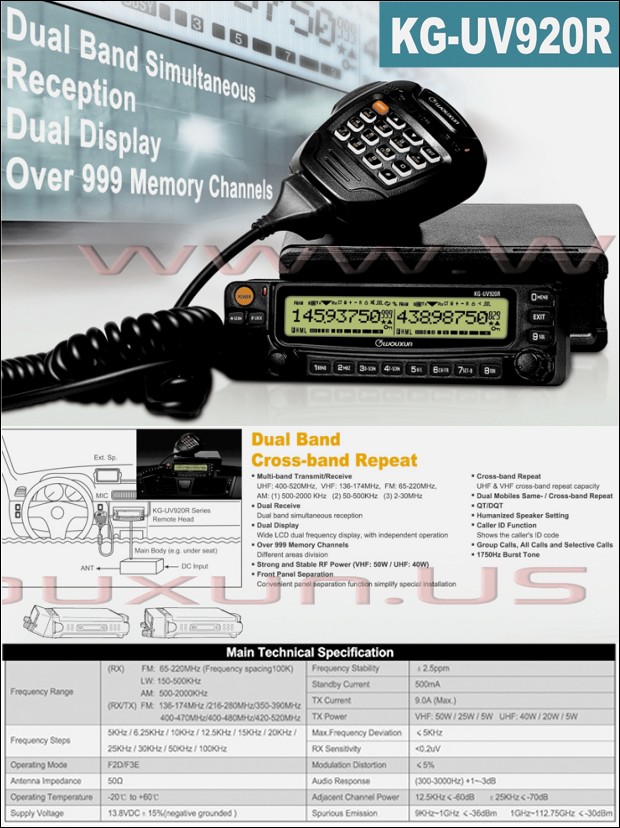
Just when you think the Wouxun (pronounced "O-shing", close to the word "ocean") KV-UV920R dual-band mobile is ready for the big time, the Chinese-built radio has apparently been delayed by the need for further testing.
There was speculationhope that it would be debuted at the Dayton Hamvention (which is next week, by the way) but that does not look to be happening...at least not if the latest update from the Wouxun web site is any indication:
May 1, 2011 Update - Wouxun has not stated a Price or Release Date for this radio. The only information China will pass along right now is "engineers are still testing".
I get about 100 emails per day, which I try to answer as quickly as I can. PLEASE do not send an email asking me when this radio will be ready or what it will cost, I DO NOT KNOW.
If you place your name on the reserve list, you will be notified immediately by email of any news I receive on this radio.
To put your name on the mailing list for updates on when the radio will be made available and the price, click here.
As I mentioned last week I got the Wouxun (pronounced "Oh-shing", close to the word "ocean") KG-UV2D handheld at the Morristown Hamfest last weekend. The radio is seeing a little bit of action, and needs some getting used to in order to properly operate it. After a week's worth of tinkering with it, here's my evaluation.
The KG-UV2D comes in 3 different versions, all using the same model number. On the 2 meter side, they all go from 136 MHz to 170 MHz. For the other band, there are three different frequency ranges. The one I have goes from 216-280 MHz covering the 1.25 (often referred to as "220") meter band. The others operate on the 70cm (often referred to as "440") band in 2 different ranges, one from 350-470 MHz, the other from 420-520 MHz. This review should cover most of what the 2m/440 radios have to offer as well concerning the functions of the radio.
Back to Basics!
First off, the relative simplicity of the radio is probably what will attract many hams (once they go past the super low price). Remember the Radio Shack HTX-202? That was a simple radio! Easy to use, clean keypad, not a lot of bells & whistles that some of today's HT's are overloaded with. It was a great first radio for may hams like myself, cutting their teeth in the post-apocalyptic no-code fallout back in the early 90's.
Don't get me wrong, it doesn't hurt to have too many gadgets on a radio to tinker with, but mess with the wrong setting, and you might have to do a hard reset of everything and start all over...
Wouxun was smart to not throw too much into these little radios. Put the essentials in (CTCSS/DCS tones, DTMF, Time-out timer, VOX) and throw in a few extras just to keep it interesting (FM radio, LED light, stopwatch, and alphanumeric memories).
RTFM (if you can)
One thing will be noticeable when you peruse the box and that is the owner's manual is not exactly, shall we say, proper use of the Queen's English...in fact, the "Engrish" is quite choppy at times. For example, the TOT function, what we call the "Time Out Timer", they dub it as the "Transmit Over Timer". There's quite a few others, but one thing I want to encourage is that, despite the rough translations, do not throw the manual away! It helped me figure out a few things I was doing wrong with the radio before getting on here shouting "this thing sucks" or something else...
I've talked with a few who went to the hamfest and got the radios (the 2/440 variety mainly) and a few were less than enthused with the radio. My first question to them was "did you read the manual?" and when they got done laughing, I reiterated "Seriously, read it!"
If you can overlook the grade-school-level translations of the Owner's Manual, reading the manual is not a large hurdle and you can get a better feel for this radio by reading it front-to-back. Right out of the box, you can figure out much of the functions with little confusion, but to get the full range of features, the manual is a must.
What happens in memory stays in memory
In one instance, I couldn't choose between high and low power via the keypad menu (more on that below). So if I wanted to shift from high to low, or vice versa, if I went through the menu options, and chose one or the other, the radio would beep three times, then reset back to the power setting it was on. As it turns out, I had to go to Menu 21 (the so-called "working mode") and set it to "FREQ" (a.k.a. VFO) before it would accept a change in power settings. If you are in the mode for the memories (CHFREQ, CH, or NAME) the power setting will not change. Whatever's plugged into the memory stays there.
Get your FREQ on
In "FREQ" mode you can direct-dial the frequency you want to listen to. You can scan to locate active frequencies if you are traveling. One of the things that is almost a must will be the need for the programming cable to quickly plug in frequencies that you plan to use. The cost will be around $20 give or take. I picked one up with the radio at the hamfest. You can program the radio manually, but the cable makes it easier by far.
Programming
While at the hamfest, I got a ham to go ahead and program my radio with whatever frequencies he had defaulted on his saved file. The software was easy to install (it runs off the executable, so no "install" necessary, just make sure you use the correct software for your operating system) and programming was not that complicated. It did not automatically shift the repeater inputs on the "TX Frequency[MHz]" column, so a knowledge of the repeater inputs (if applicable) is required.
Also note, if you program a frequency outside the transmitting range (such as NOAA weather radio on 162 MHz) leave the "TX Frequency[MHz]" column blank, otherwise you will get an error when trying to write to the radio. The error "Channel Message ## Out of range" appears, the "##" is the line number indicating which memory channel contains the invalid frequency.
The software also lets you program the TOT, frequency shift and offsets, the message you want to see when the radio is powered on, and several other features.
Selecting the COM port should be easy. On my computer, "COM3" was the only COM port available to choose. If your computer asks for more than one port, select the first one, and if the radio does not write, simply choose the "Communications Port" option and choose another COM port, then repeat until the radio upload commences. A progress bar across the bottom will move from left to right indication information is being written to the radio, and an LED light will blink on the radio.
The Good
I must say the light weight of the radio out of the box is nice. At just over 8 ounces you can almost forget you have it in your hand while walking.
I did have low audio on one repeater on 220MHz, but I determined it to be my location in the house, because when I moved to a different area (outside the house) my audio significantly increased.
I recorded myself using a local a couple of local repeaters here in Knoxville, one of which has 2 meters and 220 Mhz linked together, the other was a separate 2m repeater. The recording (which can be downloaded here, 39 seconds, 116kB MP3 file) is me first testing on the 2 meter repeater, then the 220 machine. I recorded off another radio plugged into the computer, so you will hear a buzzing noise which is NOT from my transmission, but from the radio with the carrier causing the noise. My 2m audio seems somewhat muffled on 2 meters as opposed to 220, which is why I tried it out on two different 2 meter machines.
I was told by a local ham about a mod on YouTube to increase the overall audio. I may give it a whirl soon with an update.
Voice prompts are a bonus as well. I like the feature of the voice telling me the battery voltage is low. It can also be fun to put it in Chinese to see what the different functions and channel numbers sound like.
The use of DCS and CTCSS is a good feature to have. Although I personally have not used DCS, some repeaters are employing this encode/decode method.
The dual receive on the same band is very helpful. You can monitor two 2m frequencies, two 220MHz frequencies, or one of each, or turn off the dual-receive and just monitor/use one channel. The FM radio feature also allows you to monitor your favorite repeater while listening to the local radio station of choice. Once the repeater keys up, it mutes the FM radio until the traffic has concluded.
The ability to store the FM broadcast radio frequencies into separate memory banks is also a bonus. I spent a majority of time listening to local radio stations while writing this article.
I've also programmed NOAA Weather radio into the memory so that I can take the HT with me to work and listen in if the weather gets bad.
The Bad
Just a personal preference for me, but I like a knob for adjusting the squelch. Having the radio determine the squelch via a menu setting can often lead to the radio becoming "deaf" when in the fringe areas of a repeater, or when trying to work a station on simplex. Perhaps an outside knob shielding the volume/power knob would be nice in a later version. You can temporarily kill the squelch by pressing and holding side key 2 (the lower button) but for me, I like to be able to use a physical knob to control the sensitivity of the receiver.
Next, the options for choosing high/low power, reverse (input), and repeater shift are options I would have preferred to be on the keypad or the side buttons. The menu process can be complicated just to change power level or choose a repeater shift. The lower side button (side key 2) only has two options, one for the monitoring (dropping squelch) of a frequency, or the built-in flashlight.
Side key 1 has four options to select from when programming the radio (FM radio, SOS help, scan, or lamp), so perhaps the side key 2 menu in a later model should be programmed to have the option of high/low power, reverse (input), and repeater shift. Better yet, I've always been keen on having the power button be it's own button, or a push-button switch like on the HTX-202's case. The important features (power, reverse, and repeater shift) should be a one-button function, or two steps using the "MENU" button first.
The VFO knob across the top got sticky on part of the turn when spinning it. It starts smooth (notching as you turn) and then it becomes increasingly harder to turn, as if it were tightening against something. Then as you continue to turn, the friction will ease up. I got some info (thanks, Rusty!) regarding the sticking tuning knob and was told that the plastic in the knob's base may have residue that makes turning the knob inconsistent with regards to the friction. I'm hesitant to crack the radio open right after I get it (and void that warranty!) so for now I'll live with it.
The stickers that ID the antennas (one for 216-239 MHz for the ham bands, the other antenna for 240-280MHz which is allocated for mobile, mobile satellite and fixed) are not held on very well. I simply took some scotch tape, cut it to the necessary width and length, and wrapped it around the labels to help keep them in place. See image to the left to see the scotch tape on the antenna's label.
Also, the "Wouxun" label on the front of the radio kept trying to peel off. A tiny swipe of super glue has resolved that problem.
The Ugly
The one thing I'm stumped on is why the need for a "Roger beep", and more importantly, why put it on the keypad and not something more useful such as repeater shift, MEM/VFO, or high/low power? Unless roger beeps are big in China, it's not useful here.
The owner's manual also needs to be "translated". After all we get these radios from a US distributor, so perhaps one should take the time to go through and clean it up?
The Rest
The KG-UV2D also features an "SOS" transmit for use in an emergency where it will sound an alarm for about 10 seconds and repeat this alarm approximately every 5 minutes. The SOS feature might be useful for foxhunting.
Here is a demo of the SOS feature I recorded:
It's best to use a programming cable when entering the memories you want for the radio. Using the keypad can take hours as opposed to just a few moments of programming the software, and just a few seconds of upload time to the radio.
The audio on the 2m side seems to need a tad more improvement, but, as shown by the audio recording, I was perfectly readable. Still, better audio quality makes for a better overall experience with any radio.
The Bottom Line
I do like this radio. On a scale of 1 to 10, I will give this radio somewhere between a 7 or 8. You will get your money's worth and then some with this radio. You can't beat the price of this radio, that's for sure! It's lightweight design will make it nice to carry around at a hamfest. When compared to other HT's, it's got enough features to compete, yet at the same time has a level of simplicity that makes it attractive to hams who might be intimidated by those HTs that have everything but the kitchen sink tossed in to the radio. It's not perfect, but then again, is there such as thing as a perfect radio? Some of the features a ham like myself would use more often should be easier to access, but once you get used to the radio, it should not be an obstacle. If you are looking for a good quality radio that will get you on the 1.25 meter band, this will suit your needs perfectly. If 220 is not active in your area, go with the 2m/440 version.
Wouxun is getting noticed with these radios, judging by the interest at the hamfest I attended. Perhaps this will open the market up for more 220 radios by the heavyweights like ICOM, Yaesu/Vertex and Kenwood, whose 220 product lines are all rather thin or even non-existent. It might get the competition to lower their prices on their current models (and/or future ones) in order to compete, not just the 220 market, but the 440 MHz dual-band radios as well. There are things that could be better on the radio overall, but this is certainly not a "knockoff" by any stretch, and does the job for those who may want a cost-effective means of getting on 220 or 440.
A visit to the Wouxun (pronounced "O-shing", close to the word "ocean") web site while checking out specs on my new KG-UV2D HT showed that they were taking reservations for people wanting to buy the 2m/440 dual-band mobile as soon as it's available.
You can put in for a reservation to have the chance to get in on the new radios once they are available, no obligation to buy once the price has been announced in case you don't like the price.
Happy New Year! I hope that 2011 brings much happiness to everyone out there.
I started 2011 off on the right foot by attending the Morristown Hamfest, which was held on New Year's Day. It's been a long time since I attended this hamfest, probably 10 years since my last visit there, I can't remember.
The building was actually an arena/expo center, where monster truck rallies and an upcoming demolition derby are taking place. It had seating for approximately 3000 people and looked quite endearing to a possible arena football team (of course I looked at ways to put a slab of ice down and house a hockey team!). The concourse area above the seats was where the vendor tables were. There wasn't any tailgating due to thunderstorms running through the area all morning. Had the weather been perfect like the day before (calm winds, warmer temps, sunny skies) there would probably have been a larger crowd in attendance. As it was, there was still a pretty sizable turnout.
I had one primary purpose for going, and that was to pick up one of the new Wouxun (pronounced "O-shing", sorta like "ocean") 2m/220 radios if at all possible.
I met up with Tom (KE4WFJ) and we arrived just as the doors opened at 8AM.
The first vendor to the right of the entrance had a HUGE sign advertising $110 with a picture of the Wouxun radios. Music to my eyes!!!
A friend who had just arrived said that another vendor next to them had the radios as well so I ran to check their prices and they were $105! But, no 2/220 radios. I hurried back to the first vendor, and he had 1 220 radio left. "SOLD!" I yelled, and pulled out the wallet!
I also grabbed a programming cable and then cruised the hamfest for about 3 more hours (also attending a SKYWARN gathering) before calling it a day and coming home.
Well, the radio had to wait as I was exhausted from, shall we say..."over-celebration" of New Year's (don't worry, I was home, and my kids had friends over, so I didn't get sauced) and riding on 3 hours of sleep wasn't going to fly, so I crashed until late in the evening, then went to run an errand before getting home to really put the radio to the test.
The vendor who sold me the radio (DBJ Radio & Electronics) was extremely helpful in ensuring I knew what I was getting with this radio. They checked the antennas (this model KG-UV2D comes with 2 antennas, one tuned for the lower portion of the 23cm band [216-239 MHz] the other the higher portion [240-280]) to ensure the correct ones were labeled and also a card with their web site to download the software I would need for programming the radio. Then when I spoke with another tech who was at the same booth he ran and got me a coupler for the SMA antenna that the first tech forgot to include for use on an external or mobile antenna. Service, baby!!!
So, now that I have "quiet time" I got the radio out and played with it. I downloaded the software from the DBJ web site and installed it and found the programming relatively simple but tedious, still, better than trying to program the radio manually. Once I plugged all the frequencies in and saved the file I uploaded the file and it went through in less than 10 seconds.
The radio took a few seconds to reset to the new memory settings and then when I unplugged the cable the radio spoke to me (in English)!
I tested the radio out on 2 meters first by checking some of the local repeaters and keying up to see if I could hit them on 5 watts. Most of them worked, but being midnight, no one was on (or cared to come back to my call) but on one repeater (147.360) I was full-quiet into the machine, and I was some 30 miles from the repeater! The station said my audio was clean and no noise or distortion whatsoever. A great start!
So now I move over to 220 and there's no activity. I turn on my 220 base rig and key up a couple of repeaters, one of which has a slight delay, so when I keyed it with the Wouxun I had an echo that startled me for a moment, but I used it to judge my audio into the repeater, and it sounded just as good as on 2m.
So now, as I have only had about less than 3 hours of time to dedicate to my new toy, I have found the following out:
The good:
Lightweight - Compared to the Yaesu FT-50R I recently acquired from a friend of mine, it's much lighter. Almost half the weight. But the FT-50R's battery is bigger, 9.6V/11mAh compared to Wouxun's 7.4V 1300mAh.
Easy to use(so far) - it took about 10 minutes for me to figure out most of the functions on the radio on my initial go-over of it. Of course we *all* RTFM when we get a new radio, right??? It was definitely a lot simpler than some radios I've used to figure out what buttons do what.
2m/2m, 2m/220, 220/220 monitoring -If you want to listen to 2 frequencies on 2 meters, 220, or one of each, you can listen to whatever frequencies no matter the band.
Easy to program (with cable) - getting the software installed took a minute in part because I almost downloaded the wrong version of the software (my bad, I momentarily forgot I was on Windows 7 and the software is different for Vista/7 than for XP) but once I did download the correct version, I simply moved it to my desktop (no installation of software needed, it runs off the executable) and started using the software. I plugged the USB cable in and it found the driver (which I installed just before I downloaded the software as a precaution) and all I needed to do was select the COM port (easy since it was the only one highlighted) and started working the frequencies in that I wanted to program in to the radio.
Illuminated keypad - the keypad below the LCD display lights up with the display on pressing of a button or tuning the VFO knob. Very nice to have when in low light.
Voice prompt - it comes out of the box in English, with the option to have Chinese or no voice prompt at all. I had fun with the Chinese part, and it might come in handy to learn when visiting my favorite Chinese restaurant...
The bad:
Power setting not switching between high/low - It's 5W on 2 meters and 4W on 220 for high power, and 1W on low for both. Even though there is an option for high and low power, if you are on high power and select low, it negates the change and returns the setting to high. I can only assume this is a future enhancement. However, when programming via the software, it does enable the low power.
"Rotary Encoder" knob sticks - this may be just on my radio, but the so-called "Rotary Encoder" knob (VFO knob) has some variable force needed to turn at certain areas. While twisting the knob it was easy to turn, then started to stick more and more, then eased up. I'm not sure how to remedy this (other than returning it, which is not a big issue for me at this time).
Memory display slow to change - if you spin the rotary encoder/VFO knob and it clicks 3-4 times the memory display will only move up one channel. A faster processor might be in order for a future enhancement.
A roger beep? - Seriously??? You can set it to beep before a transmission, after, or both. I wonder how popular that would be?
Computer program can be tricky - When I started to program the frequencies in, the Receive frequency and the Transmit frequency default to the same. You'll have to know the correct input and output frequency of the repeater you want to talk on. Leave them the same for simplex ops.
Muting of other channel can be tricky - I'm still working with this, but be careful about your encode and decode of CTCSS when programming a toned repeater, or one that's occasionally toned. I had one repeater set in there to send and receive CTCSS tone, and right now the repeater has no tone to use. While in QSO with the 2m station, the other channel keyed on and gave a dead carrier and muted the ham I was in QSO with.
Again, this is straight out-of-the-box tinkering, so I'm sure I'll be able to find out more about what works and what doesn't over the next few days. I'm trying to see if the radio will scan like it's supposed to, or if there is VFO mode to search, something I'm not finding yet.
I did find the FM radio for the broadcast band between 88-108MHz, so I listened to some music while hammering out this post.
Overall, it's a good start. I need more time, but wanted to give a quick evaluation of the radio.
Continuing on from my previous post, while I'm on the subject of 220 MHz (1.25 meters), I welcome more 220 radios into ham radio. It seems like the 220 MHz market is thin, but there's an obvious reason. Very few countries have privileges on the 1.25 meter band; the US, Canada, and Mexico primarily here in Region 2, and no other countries in regions 1 or 3, except Somalia in Region 1. Because of this limitation, the big companies (Yaesu/Vertex, ICOM, Alinco, and Kenwood) don't deal much in the way of 220 simply because they cannot readily modify the equipment for other countries in order to sell the same model radios.
It's basic economics, really. Take a Kenwood TS-2000 HF/All-mode transceiver. This radio can be modified slightly (mainly in the power plug) in order for it to be sold in other countries like Japan, the UK, and Australia. Most of these countries have the same privileges for most of the bands that radio can transmit. Since they can sell these radios to several countries, they can manufacture more of them. Because they can manufacture more, they can buy parts in greater bulk, lowering the price of producing, thus lowering the price they can sell for a profit.
Radios with 220 capability will not be manufactured in larger quantities, so the parts cost more to order in less bulk, and increase the costs to manufacture. The higher the cost to produce, the higher the price in order to turn a profit.
It's a double-edged sword of sorts. There is a demand for more 220 radios, but the prices are higher than desired for many on a budget like myself. The prices are high because the manufacturing costs are higher for 220 than for 2m/440 dual-band radios. Unfortunately the threshold for the demand does not exceed the incentive to lower the prices to more competitive levels and invite more hams onto the band.
Yet, the band's inactivity results in a constant threat to that band being sold off to other services. It partially happened around 1988 when a portion of the band from 220-222 MHz was sold to UPS (though never used).
That's why I welcome the Wouxun radios. They offer use of the 220 MHz band at a great price and they hopefully will re-ignite interest in the band. 2 meters is already overcrowded in many parts of the country, and the 70cm band (440 MHz) is used, but has more limitations, namely in distance.
I'm hoping Wouxun will make a 220 MHz mono-band radio (HT and mobile). The prices they offer should be completely affordable and it might spark other companies to not only manufacture more 220 equipment, but also at an affordable price, same as 2 meters.
220 is a great band, with good propagation, signal quality, and the ability to continue use inside a building. Hopefully Wouxun will get the market for 1.25 meters in a renaissance of sorts, and we'll be able to drop the argument that no one is on that band.
The 2m/440 KG-UV920R is not in production (yet) but a photo appears on the Wouxun homepage labeled "Coming Soon" and a note on the side of the image says that the company's head of US distribution (Ed Griffin) is in China until the end of the month (maybe to finalize the deal with this radio?).
A promotional flyer of the new rig with some preliminary specs can be found here.
Along with 2m/440, it looks like they may try to build a 2m/220 mobile radio as well!
I don't (yet) own one of these radios, but I'm saving my pennies to get one. Two radios, in fact. Maybe three. One for me, my wife, and daughter, the 2m/220 HTs.
I've been very interested in these radios since they debuted a few years ago. The low price is obviously very attractive, but my initial skepticism was that it was priced too low (as in, "you-get-what-you-pay-for") but the overall reviews have been for the most part positive regarding these radios, and the price is very hard to pass up, considering that the cost of a dual-band radio is the same (if not lower) than most single-band radios (especially 220MHz radios).
Keep your eyes on this company, folks. They may change the market on ham radios in a very good way.