QRZ Logbook


Friday, September 16, 2011

Sunday, September 11, 2011

W2XOY recounts his 9/11 experience

Like many old enough to remember, we know where we were when we first heard about the horrible events of 9/11 as they unfolded.

Bill Continelli, W2XOY, one of the contributors to This Week in Amateur Radio (TWIAR) was in lower Manhattan on September 11, 2001. He was south of the World Trade Center and heard the 2nd plane as it flew over and slammed into Tower #2.

He gives his recollection of how he used his communications equipment to safely evacuate Manhattan on that horrible day.

Click here to listen to his story, recorded in 2001 (MP3)

Hearing Voices: 9/11 and the Ham Radio Renaissance

As the world remembers and pays tribute to the nearly 3000 victims of the September 11 terrorists attacks a decade ago, I thought I would reference this article from 2003 on how 9/11 brought a "renaissance" to ham radio:
...Sept. 11, 2001, marked a quiet renaissance in the world of amateur radio, after years of declining membership and relative obscurity. Over the past couple of decades, amateur radio operators have witnessed their beloved pastime lose much of its luster. In the early part of the 20th century, hams, as amateur radio operators are also known, were a rogue band of technology buffs who were quick to pick up on Guglielmo Marconi's experiments with then-new wireless technology. They for the most part defied government regulation of the airwaves until World War I, when the U.S. Navy shut down all non-military radio operations.
The full article can be found here.

Monday, August 29, 2011

6500

That's the number of cell towers that lost power or were damaged during Hurricane Irene.  44% of cell towers in Vermont alone were knocked out.

210,000 wired customers were out of service as of Monday afternoon, and 2 TV stations and 10 radio stations were also knocked off the air.

Meanwhile, ham radio's still chugging along for many in the northeast. Thoughts of amateur radio's decline and "ancient" form of communications continues to shine through despite the conveniences of modern technology, which isn't convenient when a natural disaster such as Hurricane Irene takes out the resources needed to communicate.

Saturday, August 13, 2011

What's the frequency, Kenneth???

Off and on I've been trying to find a way to listen to the meteor showers that frequently hit the Earth. The idea is that as a meteor hits the ionosphere, it scatters said ions and radio frequency signals that normally would just radiate into space are instead reflected back towards earth. Hams frequently use this method when making contacts via meteor scatter

There are web sites set up for people to listen to the NAVSPASUR (Air Force Space Surveillance System) transmitters on 216 MHz. I've not been able to hear the transmitters even though I live close to the facility in Alabama.

I've tried to listen to the meteors using a "poor man's" method of listening to TV signals from stations in other cities like Chattanooga and Bristol, TN. That idea went out the window when the FCC kicked TV stations off the analog frequencies in 2009. I've tried listening to FM radio stations using this method, but the dilemma I have is that, with Knoxville being such a big radio market, practically every available frequency from 88-108 MHz is taken locally.

So now I'm left trying to find any good radio frequency that would work for me to listen to meteors "pinging" the atmosphere. It needs to be outside the Knoxville area, constantly transmitting, and with a high enough power to be heard distinctly when the meteors pass overhead.

If anyone can assist with this quagmire, I'd be most appreciative.

Oklahoma ham loses radio equipment, home to wildfire

Harold Lazear (K5KLM) of Terlton, OK saw the flames coming and hopped on the roof of his home with a hose to try and do whatever he could to fight the inferno from taking his home and its treasure trove of ham equipment he'd collected over the years.

In the end, the fire won the battle.

The flames approached so fast that when Lazear realized he was not going to be able to hold off the fire, he only had time to jump in his pickup and leave without collecting any radio equipment. It all burned to the ground in 10 minutes.

After building up a collection over the years as a storm spotter and Red Cross volunteer, he now finds himself a recipient of aid from the agency he dedicated his volunteer time towards.

People who wish to donate may do so with a credit card at the Red Cross website, tulsaworld.com/okredcross, or by calling 918-831-1170. Checks can be mailed to American Red Cross-Tulsa Area Chapter, Dept. 995, Tulsa, OK 74182. Make checks payable to American Red Cross-Tulsa Area Chapter.

Friday, August 5, 2011

ARISSat-1 launched from ISS, missing UHF antenna


After a 4-hour delay due to issues with a missing UHF antenna, Sergei Volkov, RU3DIS, and Alexander Samokutyaev deployed ARISSat-1 from the Pirs module of the ISS last Wednesday.

While preparing to deploy ARISSat-1, the spacewalking cosmonauts noticed only one antenna protruding from the bird when there should have been 2, one for 2 meters (VHF), the other for 70cm (UHF).

Controllers in Moscow and Houston decided to postpone the deployment to evaluate the issue as the cosmonauts continued with their remaining scheduled spacewalk duties.

Later in the spacewalk, controllers gave the go-ahead for Sergei and Alexander to send ARISSat-1 into space, gently nudging it aft and nadir of the station in order to eliminate the possibility of collision with the station later.

The images posted are actual screen captures taken by ground stations listening for ARISSat-1's SSTV signal. You can see the helmet of Sergei Volkov and a pre-loaded image of the ARISSat-1 logo. Live cam images are captured at various times which will allow for stations on the ground to get a near-real-time static image of what ARISSat-1 is seeing over 200 miles high. If the satellite goes into darkness, the logo images are transmitted.

In addition to SSTV, voice and BPSK at various times. While in the sunlight, it will transmit on high power and near-continuous transmission. While in eclipse, it will go into power-saving mode, transmitting intermittently.

It's not yet known the full extent of the damage to the UHF system (designed to be a linear transponder), however, hams are reporting they are making successful contacts with it.

For now, here are the modes of operation:
  • 145.950 MHz FM Downlink: FM transmissions will cycle between a voice ID as RS01S, select telemetry values, 24 international greeting messages in 15 languages, as well as SSTV images.
  • 435 MHz - 145 MHz Linear Transponder: The linear transponder will operate in Mode U/V (70 cm up, 2 meters down). It is a 16 kHz wide inverting passband and the convention will be to transmit LSB on the 435 MHz uplink and receive USB on the 145 MHz downlink.
  • 145.919 MHz/145.939 MHz CW Beacons: The CW transmissions will be call sign ID RS01S, select telemetry and call signs of people actively involved with the ARISS program.
  • 145.920 MHz SSB BPSK-1000 Telemetry: When the CW2 beacon on 145.919 MHz is active, this indicates that the BPSK-1000 format is being transmitted. If the CW1 beacon on 145.939 MHz is active, the backup of BPSK-400 format is being transmitted.
ARISSat-1 is also known as "KEDR", which translates to "Siberian Pine" in Russian. It was Cosmonaut Yuri Gargarin's callsign during his flight which made him the first human being in space. ARISSat-1 was launched to coincide with the 50th anniversary of Gargarin's historic flight. Its callsign is RS01S.

Check out AMSAT's "how-to" page for information on how to operate ARISSat-1.

Tuesday, July 26, 2011

What if you had a Field Day and didn't care if anyone attended?

Two of the last three Field Day's I have attended, one was operated under my callsign last year. The other two were at a club site I'm not a member of (don't want to give out their name) and I spent a grand total of one hour visiting, and both times I got to operate a grand total of zero minutes.

Part of the reason is that I didn't show up until close to midnight. Part of the reason being I watched my kids and the wife was working. Another that it was freaking HOT, as it usually is around this time of the year the last weekend of June.

The first of these 2 times was 3 years ago. I'd visited this site several times before. A friend of mine had a camper there and so when I would come he'd gladly take a break and let me operate. I'd stay until 3-4am operating (I'm a night owl) and would rack up many contacts/points for the club.

3 years ago, however, I showed up and either my friend closed up for the night or wasn't there at all. When I arrived, no one was around to talk to at this lakeside area, so I couldn't find out who was where. The campers that were there, I didn't want to just walk in as these were campers where people slept, and the lights were out on all of them. I felt like I was intruding and left. It took an hour to get there, and less than 15 minutes later, I was going back home.

Last year we operated from a campground and had a good time, but couldn't get the troops rallied for this year. I decided to give the previous place another try. Unfortunately I couldn't get there earlier than intended, and once again I arrived at midnight. This time, our friend's camper wasn't there, and no one there knew why. My friend and I did go in to one of the campers and PSK31 and 40m voice was in operation. But the stations didn't want to give up the radios to let others operate. Not even an offer of "come see how this works", just basically working the radios oblivious to our presence. We just stood there looking (and being) bored.

The other camper set up had the lights out...again, and the VHF (6m) station was shut off after the band died. The one station from Texas we heard abruptly yelled "YOU'RE A DUPE!!!!" when the operator made a call to him.

Once again I felt that, even though there were friendlier folks there this time around, we were in the way. I left after about 30 minutes, vowing never to return.

This club (among others) tend to forget Field Day is 24 hours, not just 10 hours active, 6 hours slow, and 8 hours active. Some people like myself can't be there until late, when you would think they would be desperate for operators. I operated one year from Oak Ridge and some of the best operating was from 2-6AM, and we got so punchy that stations were not sure if they were listening to Field Day ops, or a bunch of morning show DJs. But we kept it legal and clean...and fun. And the stations calling us were enjoying the show.

Unfortunately I don't know anyone at the Oak Ridge club anymore, and the club environment for me is a touchy subject as it is, and the only reason I went to the lake was because some friends were there, or at least they used to be.

I thought Field Day was supposed to be a welcoming committee and a public event, but several times over the years I didn't feel welcome. With people not knowing who I was (often a good thing) I was made to feel like an outsider.

Back in 1999, I oversaw a Field Day event for a club, and one thing I absolutely ensured was that anyone who showed up at any time was greeted, made to feel welcome, and that people were allowed to operate when it was possible, with no "hogging" of the radios. It was one of the most successful Field Days that club had experienced in years.

I wonder why no one else follows that plan of attack these days?

Saturday, July 23, 2011

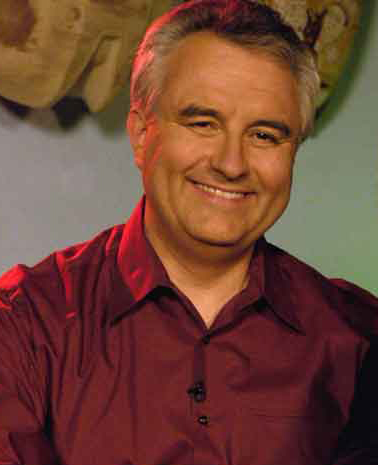
Leo Laporte, KJ6QGP (W6TWT)

Leo Laporte of TWiT and The Screen Savers fame is now KJ6QGP.

Leo's already embraced ham radio by partering with Bob Heil of Heil Sound who's doing a weekly podcast and starting up a ham radio social network.

So does this mean he'll be showing up at Dayton in the near future?

UPDATE: He has applied for and will be granted W6TWT

Thursday, July 21, 2011

No Morristown hamfest in 2012

Got this off Facebook:

Morristown TN Hamfest 2012 Canceled
There will not be a Morristown Tennessee Hamfest during the year of 2012. The Lakeway Amateur Radio Club voted to not have a Hamfest in 2012. If you have attended our Hamfest or setup at our Hamfest, we would like to hear from you as to how you feel about Hamfest and your thoughts on the time of year to hold a Hamfest. Any comments you have will be greatly appreciated.

Thank you,
Eugene Rogers
Webmaster
zher1@juno.com


I attended the Morristown Hamfest last January (they traditionally have it the first Saturday of the New Year) and it looked to be well-attended. It was the first time I had been in almost 10 years to Morristown's hamfest. I purchased the first of my 2 Wouxun radios there and am surprised at this decision.

A lot of people are remarking about the decline in hamfest attendance throughout the years. I can remember some of the hamfests I first attended in the 90's being crammed with folks from all over the region trying to snag up a bargain. Some blame the internet, some blame cellphones, some blame the economy, and some blame eBay for the decline.

There may not be a "smoking gun" reason for the decline but a combination of factors.

Still, I was planning to attend next year's hamfest, whether I had something to sell or buy or nothing but hang out with friends. I guess this may be another casualty of the times we are living in.

Monday, July 18, 2011

STS-135 launch (and spaceflight thoughts)

The week of the 4th of July I was in Florida visiting family and looking to attempt to watch Atlantis lift off from the Cape on the final Shuttle flight.

Two things:

1) I will NEVER drive through Orlando ever again if I can help it, and
2) It's sad that we will never have this opportunity to see such awesomeness ever again.

We were staying in Daytona Beach for a couple of days (we didn't dare try Cocoa Beach or Titusville) and I took the family down as well as my mother. We went mainly because she'd never seen a launch and wanted to catch it before NASA ended the shuttle program. Ironically, the day of the launch she felt ill and didn't want to make the trip down from Daytona. We arrived from Ft. Myers the day before and were pretty exhausted from the drive after suffering through Orlando during rush hour with a monsoonal rain to add to the misery. Two hours and 3 "alternate routes" through Orlando, and we arrived in Daytona about ready to stay without making an attempt to go to the Cape area.

And to boot, it was questionable whether they'd launch because of weather. a 30% chance of a launch was not good odds, but something told me that, with close to a million people watching around the space coast, I began to wonder if they'd forego some restrictions in order to finish up the program. With the shuttle program already a year behind on its scheduled shutdown, I thought for certain that they would be under pressure to finish while maintaining an acceptable limit of safety. After all, the last two times that NASA got complacent we lost two shuttles and 14 astronauts.

I didn't decide to make the trek south until about 2 hours until liftoff. We got on the road south on I-95 and I took an exit just north of Titusville. My plan was to simply get on the outskirts of the crowds, yet stay close enough to actually see the liftoff.

We rode US 1 to the Titusville city limit and checked the GPS for any nearby parks. But on the way we started seeing cars on the side of the road, so we figured the park was jammed.

As I turned around and went north, I spotted a parking lot near the hospital that was occupied with people watching the launch, but looked to have a few spaces left. When we got parked we had 30 minutes before liftoff. We walked around the area and then got back to the car and set up the camera.

As we got closer to the T-0, we could feel the anticipation grow. Then at 31 seconds, there was a halt due to a problem with the fuel arm that loads the liquid propellants into the external tank. We thought that was going to blow the launch for the day, but they were able to quickly resume the count after confirming that the arm was fully retracted. When the count hit zero, we waited for about 8-10 seconds before we saw it rise from the treeline and head into space.

Unfortunately the low clouds made it viewable for only 10-15 seconds before we lost it to cloud cover. We were a lot closer to the launch site than I thought, as we were looking towards an area further south than we actually were. The shuttle appeared further to our east and closer than I imagined. I had my video camera pointed to the southeast, but when I grabbed it to look east, I bumped the on/off button for the recording. When I looked at it later, all you see is a still shot of the view southeast, then a cut to the smoke trail heading off into the clouds. Fortunately my brother loaned us his digital camera as well as the video camera, so I managed to get off one good shot before it got into the clouds.

Almost immediately I grabbed the tripod and equipment and got into the car, the delayed sound of the shuttles SRBs roaring to life wafting over the crowd as we quickly made our way back to Daytona Beach. We got back to our room before 1PM. After being stuck in Orlando traffic, I was glad we didn't need to suffer through space coast traffic the day after.

As we drove back to Daytona, I then had the time to really ponder what we had witnessed and the impact on our future as a space power.

I'm not wanting to drag politics into the post, but you have to wonder why, after we built the majority of the International Space Station, and we footed most of the billions needed to put it in orbit, we now have to hitchhike with our partners in Russia, and then shell out millions for the rides. I'm curious how much money Russia paid NASA in order to ferry some of their cosmonauts on the shuttle.

Still, $56 million per person is a lot cheaper than what it would cost to launch another shuttle.

The reality is that the Space Shuttle, while cool, and an amazing display of American ingenuity technology and power, is almost 40 years old. It boggles my mind how stagnant the manned spaceflight program has been. In roughly 15 years, we went from Mercury, to Gemini, Apollo, then the Shuttle. Mercury was started in 1959. The shuttle program's origins go back to around 1969 as we landed on the moon. But from there, we have not launched anything other than the shuttles since 1981.

The shuttle was designed to make spaceflight "normal", and cheaper, more efficient, and almost as commonplace as getting on an airplane and flying from New York to London. And while the shuttle has made spaceflight a more achievable plateau than it was in the 60's, we have a long way to go before it's a mode of transportation that is as commonplace as air travel.

With the manned spaceflight program in full gear in the 60's to get to the moon, it would have appeared the the Space Shuttle was going to follow the same route, with Columbia being a "Generation 1" shuttle, and later shuttles being bigger, more advanced, and in some ways cosmetically different from one another. Other than subtle technology advances that made OV-105 (Endeavour) lighter than OV-102 (Columbia), there was no real change in the orbiters as far as concept, aerodynamic shape, etc.

I was hoping by now we'd have a shuttle with something like 9 main engines, a double-wide cargo bay, launched on a stack with 6 SRBs and a huge external tank 3x the size of the one the current fleet used. We never got to that point. I am sure THAT would have been impressive...

So now where does manned spaceflight go? We have a space station we can't get to, unless we hitch a ride with the Russians, and the only sign we're going to get back to a domestic manned program is either private industries like SpaceX or Congress appropriating more money towards the ARES program, using capsules to get into orbit rather than shuttles. And capsules seems rather regressive to me.