QRZ Logbook

        
Showing posts with label meteor. Show all posts

Saturday, September 28, 2019

Draconids Meteor Shower Coming!

Skywatchers should be prepping for the Draconids upcoming in October.

This meteor shower is different as the meteors tend to peak after sunset, not after midnight as many meteor showers tend to do.
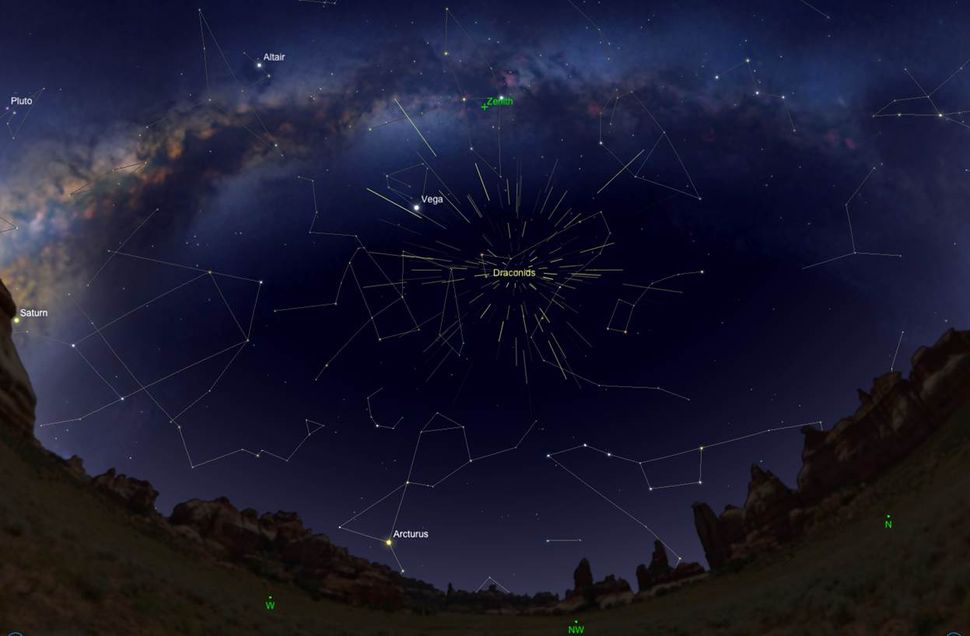
Draconids
The best night to watch is Tuesday, October 8. However there should be good opportunities a couple of days before and after.

The peak should have around 60 per hour, but the comet that produces the meteor shower, 21P/Giacobini-Zinner, made it's closest approach to the Sun last year. While there is not an outburst predicted with this shower, they can surprise stargazers with unexpected bursts of meteors and the recent pass by the comet may do just that.

Some meteors may be washed out, however, as the moon is waxing gibbous and will be over 50% full during the peak.

Still, I plan to watch. Weather permitting, of course...

Saturday, December 15, 2012

Geminids meteor shower pretty active

I went outside Thursday night in the chilly weather around midnight and the Geminids meteor shower was in full swing. I witnessed a few dozen before having to go to bed.

I'm still trying to find a frequency I can listen to in order to "hear" the meteors as they come into Earth's atmosphere. I posted about my search some time ago and still haven't gotten any success in locating a good frequency to listen.

It was suggested I try an empty National Weather Service frequency for NOAA weather radio, but where I live all available NWS frequencies are in use, either from Morristown or Nashville, and my antennas pick up the ones off in the distance and so any NWS frequency I tune into I can hear something enough to where any attempt to listen is futile.

Since the FCC transition to digital, there are not major TV stations that I can tune in, and the low-power TV stations that remain I couldn't hear, but then again I don't see any listings for said low-power TV stations in adjacent cities.

I'll keep searching, but in the meantime here's a blurb about meteor scatter on boingboing.


Saturday, August 13, 2011

What's the frequency, Kenneth???

Off and on I've been trying to find a way to listen to the meteor showers that frequently hit the Earth. The idea is that as a meteor hits the ionosphere, it scatters said ions and radio frequency signals that normally would just radiate into space are instead reflected back towards earth. Hams frequently use this method when making contacts via meteor scatter

There are web sites set up for people to listen to the NAVSPASUR (Air Force Space Surveillance System) transmitters on 216 MHz. I've not been able to hear the transmitters even though I live close to the facility in Alabama.

I've tried to listen to the meteors using a "poor man's" method of listening to TV signals from stations in other cities like Chattanooga and Bristol, TN. That idea went out the window when the FCC kicked TV stations off the analog frequencies in 2009. I've tried listening to FM radio stations using this method, but the dilemma I have is that, with Knoxville being such a big radio market, practically every available frequency from 88-108 MHz is taken locally.

So now I'm left trying to find any good radio frequency that would work for me to listen to meteors "pinging" the atmosphere. It needs to be outside the Knoxville area, constantly transmitting, and with a high enough power to be heard distinctly when the meteors pass overhead.

If anyone can assist with this quagmire, I'd be most appreciative.

Friday, April 8, 2011

Fireball crosses the Tennessee skies Wednesday

Last Wednesday, while talking to my Stepmom on the phone, I saw a meteor streak across the sky off to the West, going from South to North. It was slow moving, not like your typical skimmers and streakers that go across the sky. I actually thought it was space junk re-entering.

According to Spaceweather.com, it looks like that meteor may have actually landed!

I guessed that it might have either burned up or landed around the Jamestown/Crossville area, or north of there. Due to partial cloud cover it disappeared behind the clouds before I could determine if it was disintegrated or if it continued on to the north.

Judging by some reports coming in, it may have continued on towards Louisville, KY (I was in Cave City last summer) or somewhere around the TN/KY border in that area.

If you saw it, submit your report to the American Meteor Society web site's online form.

I wonder if this means that the Meteorite Men are on their way to the area?