QRZ Logbook


Monday, August 10, 2009

The great radio install odyssey

Every once in a while it's good to challenge yourself, to think out the processes of how to execute the procedure, and to adapt to changes brought on by obstacles in your way. Such was the case in early June getting a radio installed in my SUV...

I own a 2002 Chevy Trailblazer. It's nice, got it used almost 2 years ago, and with few exceptions have enjoyed the vehicle. I had not installed a ham radio in it as I did not have all the right equipment, the money to invest in said equipment, and I didn't want to drill holes anywhere that were visible or otherwise.

I'm not the most mechanically inclined person out there, and I am the last person you'd want to talk shop with on auto body and repair. So I met this challenge with great trepidation. Given my track record in the past, if I screwed something up, I was going to FUBAR the entire electrical system, spring a leak in the oil pan, or somehow generate a wormhole to Alpha Centauri.

This started about a year ago. See, my initial plan was to place the antenna in much the same configuration as what is on our Windstar minivan, which was to have a mount on the rear tailgate and off to the side. Unfortunately, the Trailblazer's tailgate is set so that the windows and the metal are seamless and it's impossible to mount the Comet CP-5 in the rear. So I decided I would mount it on the hood of the Trailblazer. This has become a subject of debate for a couple of my friends and I. One thinks I'm going to cook my brain every time I key the microphone at 50w. I, on the other hand, feel less conservative when it comes to that. I've been using my cell phone for several years, and haven't felt any side effects...yet...

Next, what kind of antenna will I purchase? I have several mobile radios, the Alinco DR-135 2m with TNC, the Kenwood TM-742 tribander (2m/220/440), the Yaesu FT-1802 2m, and a beat-up but functioning Yaesu FT-5100 dual-band mobile. I also have the Yaesu FT-100D I could take mobile, and my wife's FT-7800 dual band which is in her minivan.

I purchased the Comet mount and a tri-band antenna (2m/220/440) at the Knoxville hamfest last June (as in 2008). I figured if I was going to invest, I might as well get one for all three bands on my mobile radio collection. Somewhere in this house (I think) is the ATAS-100 antenna for the Yaesu FT-100D. I misplaced it after a Field Day some years ago and unless someone swiped it (which in my world is possible) I just have yet to find it.

I started initially by asking questions on both ham radio forums and on forums for Trailblazer owners. I wanted to get as much info as possible. I had people who were TB owners, Chevy mechanics, and even a pro installer helping me out as much as possible. Through it all, I kept putting it off because I just didn't want to drill a hole in the firewall or, as mentioned before, tear something up that would end up being a $4000 repair job. I even began calling around to see what estimates the pro installers would want to put it in, I was that intimidated by the project.

Every so often I would glance into the engine or under the carpeting to see where I could poke a hole if need be. However, I never quite made the connections between where the grommet was that would go into the engine compartment. Again, my naiveté in all things mechanical prevented me from connecting the dots. In April my wife decided we needed to go visit her sister's home in Iowa. The trip would be in the Trailblazer. When the plans were finalized, I decided to buckle down and get the radio installed. So, I concentrated on the antenna first, and would worry about the radio later.

Day 1: Questions, questions

For months off and on, I probed the forums and asked about where the plugs/grommets/holes were supposed to be. As things ramped up on getting the trip planned, so too, did I re-visit the issues on the forums. I studied the forums for signs of where to install the radio (didn't want it on top of the dashboard, and couldn't fit in between the seats). I finally found a forum thread where a user had installed a ham radio in his TB and he mentioned the location of a rubber grommet, and I went outside (at 11 at night) and found it. Okay, so part of the mystery was solved. Now, how to either widen the hole in the center (which was tight due to the wires already occupying the center of the grommet) or to loosen it and fish the wires through. Again, my reservations crept up as I once again did not want to poke a hole, and have it hit the wiring and shock the hell out of me or short the entire dashboard to oblivion.

Once I was assured I was not going to electrocute myself, or go broke fixing a screwup, I bought an awl just for the purpose of poking through the grommet. Then I embarked on a search for the infernal T-connectors that no one seems to carry, yet every damned one of my radios (sans the FT-100D) has them out of the box. Go ahead and try to find them at your local shops. I dare you. I twittered my contacts, which spilled onto my Facebook page (my "tweets" also simulcast to Facebook) and no one could help except for a link to Powerwerx.com. I tried hardware stores, Radio Shack, and even a CB shop, to which I was met with the somewhat-unsurprising, "Sir, I have NO idea what in hell yer talkin' bout" response. Nevertheless, imagine my surprise when I remembered there was a spare cable at home in the FT-1802's box, freeing me the agony of having to go through the ordeal I just embarked. I'm a glutton, I suppose. But now I have the two things I need to get the party started, along with the antenna mount and antenna.

Day 2: Shock and awl

After work the next day, I come home and start to gather all my items for the install. I've got most every tool I can imagine, most others I can't, and the assortment of implements of destruction to carry out the deed. I get the awl ready to go and aim at the target, the grommet. I gingerly work the awl in, and to my surprise, no sparks, smell of ozone, and no electrocution!

So now I go find out where the grommet exited:

The grommet going into the engine was basically staring me in the face all this time. I never realized the grommet set so high into the engine area. I thought it was much lower. So much for my depth perception...

So I then start to wiggle the awl around and try to widen the hole. As I'm reaching for my pocket knife, the grommet pops off one side. "Great", I thought, but as I checked, it seemed like it would be the optimal place to fish the wire and antenna coax through, so I decided to simply route the wires through the side. The result is below:

Not the greatest job, I'll admit, but for what I needed, it works. I'm going to re-work it later on to where the grommet has a better seal overall.

So I get the power cable in, then the antenna is next. It, too, easily goes in with little convincing. The antenna was mounted to the hood in little time (pic to the left), and I feel like I'm making great progress. I install split flex tubing around the antenna and power cables, then have to stop everything and make a quick run to pick up one of my kids from a friend's house.

Upon returning home, I work on getting the power cable into the battery. Boy was that a riot! Without boring you, I'll just say it took 2 hours, yelling at the connector, cursing deities for smiting me, shaving off some of the rubber insulation around the battery connector to fit the wire into the bolt so it would have a firm connection, and divorce lawyers on standby.

After that odyssey, night fell, and it was time to call it a night. 7 days to Iowa, and I started to feel pressure. Just how easy would the install be?

Day 3: A mobile conundrum

Again, I am working, and I spent part of the day (and my lunch hour) scouring for ideas on where to put whatever radio I was going to use. I got home and the weather was getting stormy, so I decided I'd work on my Yaesu FT-5100 and try to blow the cobwebs off and see if I could make it mobile-ready. My wife was at work, and the kids were antsy due to the storms and lightning in the area, and I took my radio, old Radio Shack (errr...sorry..."The Shack") magnet mount antenna, and a power supply upstairs to work on programming it while the rain came down.

I stuck the mag-mount sideways onto my tower, and fed the coax in from the back door to the dining room table. I hook everything up and start to try and sort out the radio's startup issues (apparently it was modified, and a very complicated process had to be done to just get the radio to get into the proper bands for starting up, as well as discovering the battery in the radio for memory was apparently long-dead) and the rain outside turns to a monsoon. My tower is located next to the gutter, and the gutter became clogged. Niagara Falls is now right outside my door, so I venture out to unclog the gutter. As I grab a clump of...something leafy, brownish, and soggy, I toss it over the opposite side of the tower, but it hits the mag-mount and takes it down. The mag-mount falls, and the attached coax yanks the radio off the table.

At first, it appears that everything is fine, and I pick up the radio and reconnect it. But when I power the radio back on and push the "Function" button (F/W) it's stuck. As are two other buttons on the face plate. It appearently landed on the VFO knob and jammed the front good and solid. I didn't pay a lot for the radio, and apparently I got what I paid for. Karma is not shining well on me.

So I look at my other multi-band radios. The Kenwood 742 tri-bander (which I do not have a mount for), my FT-100 (wrong power connector), and my monoband FT-1802. My wife tells me to take the 7800 out of her minivan and use it for the trip, since she seldom uses it when she drives the minivan (unless I'm driving in a caravan or using it while driving her car). I decide it's the best option since it did have 440 capability. So after the monsoon, I went out at 11PM-ish and took the radio and mount out of the minivan and took it back to the Trailblazer. The 7800 was set up with the radio's chassis in the back of the van, and the faceplate (separated) in the front of the minivan. So imagine my surprise when I can't find the cable to connect the faceplate back to the chassis, just the 20' long cable from the back to the front...

So I have a couple of options, find a place to mount the chassis SOMEWHERE up front, and put the face up on the dash, or try to get a new cable made for mounting the radio to the chassis. Ant this is not just any cable. It's RJ-12. Picture normal telephone cable (RJ-11). It has 4 wires. RJ-12 fits a plug the size of RJ-11, but it has 6 wires. This is not going to be easy to find, it appears. So, I leave the radio in the car and go back inside, feeling modestly defeated. Another day, another setback.

Day 4: CABLE GUY!!!!

I get to work the next morning, the radio riding shotgun since I hadn't mounted it yet. I get to work and ask a co-worker if he had crimpers at his house (he used to be a cable installer). Unfortunately he didn't have any equipment anymore as he sold it all years ago. I take one of my breaks and run out to a wiring supply store located across from the place I work, and ask for RJ-12 cable. They said they didn't carry any there, that it was special order (and in 1000' rolls) and that I would need a lot of luck finding some in Oak Ridge. I thought it funny, because, well, Oak Ridge did have a little technological history here and there...

I go back to work and talk more with my co-worker, and he suggested buying crimpers and checking Home Depot for the plugs, and take the 20' cable I had and cut off and end and cut it for the 3" piece I needed for the direct connection between the chassis and faceplate. So I run to the Home Depot during lunch, and I buy crimpers that were cheap, but were "designed for RJ-11/12 connectors". And by good fortune, they did indeed carry RJ-12 plugs! I do love that place sometimes...

I ran back to work, wolfed down my lunch, and worked on the cable. I cut one end, hooked up the cable in the proper orientation (based on how the original cable was set, you have to flip the connector's wires) and crimped.
It was then I made another ill-fated discovery. The crimpers were "RJ-11/12 compatible" but they only crimped RJ-11's 4 wires, with NO CRIMPS ON THE OUTER 2 for RJ-12!!!

I found a couple of guys installing network cable in the building and begged for crimpers, and they said they didn't have any that day (they were finishing a project which didn't involve crimping anything, apparently) and once again I'm out of luck. Thinking fast, I replaced the crimpers in its packaging, taped up the package, and after work ran back to Home Depot and exchanged it for REAL crimpers...the kind that were indeed made for RJ-11, 12, 45, 92, 85, 55, BINGO!

I get out to the car, remove the crimpers, and with a quick bit of careful pressure, had me a connector cable for the radio! I placed the faceplate to the chassis (a bit of a struggle because the cable was 1/4" too long) and plugged in the radio and antenna. Life was good! I might get this thing installed after all.

I get home and get to work on the mounting of the radio. I snake all the excess wiring under every crevice I can think of, under the carpeting, behind the center console, under the console, etc. I decide that the best place for the radio is below and to the right of the steering column, where I had seen another person on the Trailblazer forum mount his radio.

I mount the bracket, putting two small holes "conveniently" out of view. It was here that I faced yet ANOTHER issue. I put the bracket so close to the center console I had little room for the screws with which to mount the damned radio!

BUT...I refused to be set back anymore. I was able to use a magnet screwdriver to hold one screw in place while getting the radio mounted in the bracket. I used what little space I had and needle-nosed pliers to put the final twists on this odyssey. A couple of zip ties later, I finally have my radio installed!

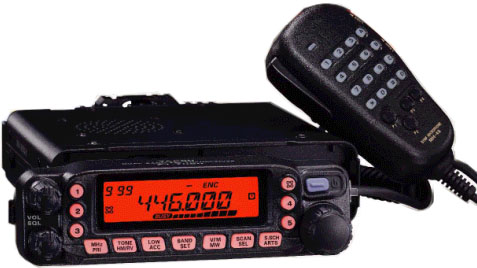
The finished product is below:


So, if you've made it this far, you have (hopefully) gone through the best/worst of times, just as I did (I have a habit of wanting to make the reader emotionally involved in my stories).

I learned a lot about this install. Mainly I learned I could actually do it. Most other times I've had someone install it with me or for me. It built up confidence I needed, and hopefully will not be so intimidated on my next install.

My next post will be what happened on the way to (and in) Iowa on the radio. Was it worth the trouble getting a radio installed? Stay tuned. I'll have it posted in the next week.

Friday, August 7, 2009

My daughter's getting closer to getting her license + other tidbits to catch up on

Just an FYI, my older daughter, Lauren, has finished studying the question pool, and is now working on taking the practice tests on QRZ.com.

I'm also going to post about my trip to Iowa from June and installing my radio for that trip. They should be posted early next week.

I'm heading to Dayton, OH this weekend for a wedding, so I may be able to make some QSOs while in the area. I'll only be up for the weekend, so there won't be much time to enjoy the trip.

I wish I knew what was up with FARA. Their web site is dead (has been for several months) and when I tried a couple of their repeaters last month going to Iowa I couldn't raise them.

BTW: It looks like the Mt. Mitchell repeaters got a 1-year reprieve from the radio station that wanted to kick them out. It will hopefully give them enough time to either relocate the repeaters to another tower on the mountain, or convince the land owners that amateur radio is worth keeping around the mountain.

I was talking to a ham in Chattanooga 2 weeks ago who told me that several repeaters north of there between Chattanooga and Knoxville got evicted from their towers after a SNAFU involving a new owner of the towers and the contact information being lost. One of the stories I was told is that the Park Service was even cut off, and within a few minutes of going off the air, a Park Ranger arrived at the tower site and demanded to know what was going on. The hams who were running one of the repeaters cut off were also there, and witnessed the Park Ranger threaten the tower climber with arrest if he did NOT restore service ASAP. The tower guy didn't know what to do, because he got an order to remove the equipment, and was gonna go to jail if he did.

Sometimes I wish amateur radio had that kind of clout.

It looks like they got things cleared up with the Park Service real quick. However, the amateur repeaters (as many as 10 or more if I remember) are still off the air until a new contract is worked out.

It also looks like the English Mountain repeater came back to life recently. It had been taken off the mountain several years ago after a tower collapse that forced the land owner to require a fence, insurance, and other amenities that basically forced the repeater off the mountain. The repeater's owner, Sam Kirby, WB4HAP, passed away unexpectedly in 2007, and the future of the repeater was in even more doubt. However, Tim Berry, WB4GBI came through, returned the repeater to English Mountain, and once again, the activity is making a renaissance.

It may not match the activity of it's peak in the late 90s, but there's only one way to know for sure.

And what the heck is up with Radio Shack dropping "Radio"? Is it just for advertising, or permanent? I have money on this being a marketing test, to see if the public responds in waves to the impending onslaught of advertising and marketing in advance of the Christmas season, and if even remotely successful, "Radio" will be permanently removed from the name of the store.

It will probably work the same way Subway did those $5 footlongs. First they were "for a limited time" then it became a constant fixture on the menu due to the popularity of the promotion.

To me, it really ceased being "Radio Shack" when it stopped selling ham radios, focusing on scanners and CB radios instead. Hams are people too, dammit! Then they concentrated their market towards satellite TV and radio, cell phones, RC cars, and batteries. They did score with SAME weather radios, but now most any store sells them, and for less.

They did earn points when they had PL-259 barrel connectors and an 8-pin mic plug I needed to solder up a mic to my ill-fated FT-5100 radio (more on that in a future post) but overall, you ask an employee a technical question, and unless they're a ham themselves (and a few are), you get the deer in headlights routine. Any more it's hit-or-miss with your question. You got questions, they got answers half the time...

Off to bed, and off to Dayton.

Friday, June 12, 2009

Mt. Mitchell repeater site risks being evicted

For those of you west of the Mississippi or north of the Mason/Dixon, Mt. Mitchell is the highest peak east of the Mississippi River.  Near the peak is Clingman's Peak, where several broadcast and communications towers reside.

The repeaters have the largest coverage area of a single repeater on the east coast.  They are on:
  • 53.63
  • 145.190 
  • 224.54
  • 442.225 
  • 443.600 
145.190 is probably the most popular of the group.  There's nary a ham in a 7-state area who hasn't heard of (or talked on) Mt. Mitchell.  Just last night I was listening to a couple of hams on there, and there was no indication of any issues with the repeater.  In fact, one of the hams I was talking with just last week, and it was the first time I had talked on that repeater since last June when I went camping near Catawba Falls.  When I first got licensed in 1993, there was hardly a moment when Mt. Mitchell wasn't in use.  I can recall a couple of hams in particular who commandeered the machine from sunup to sundown.  It was the hotspot for North Carolina, Tennessee, Virginia, South Carolina, Georgia, and even Florida.  When there was a band opening on 2 meters, it was possible to hear stations from Maine.  I heard several stories of Maine-Florida QSO's happening during openings.  Over the last few years the activity has quelled somewhat, but 

I was surfing the QRZ.com forums this morning and came across this bit of information regarding the repeaters on Mt. Mitchell:

Per owner of several of the repeaters (WA4BVW), all repeaters have to be removed from Mount Mitchell by the end of July. According to Ken, WA4BVW, the Mt. Mitchell 2 meter repeater [145.190-] will have it's 27 year anniversary this June. It is home of the 6600 net on Saturday nights, which has check-ins from NC, SC, TN, Georgia. The repeater has great coverage. When I got my ticket, this was the first repeater I made a contact on with NC4TN. I have not been a ham for very long, but I really enjoyed what time I have had on the repeater, especially the 6600 net. 

Repeaters:
I came home and received the following info via email (WARNING, lengthy):
Dear Ham Radio Community.
 
Western Carolina Amateur Radio Society needs your assistance.  
 
The Mt Mitchell Repeaters will be off the air if we do not act.  This is a BIG BIG deal.
 
Below is an email sent out to this evening.  We are asking that you forward this email to your members and ask that they respond to help us keep the 53.63, 145.190, 224.54, 442.225, 443.600 repeaters on the air.
 
You may follow this on QRZ -  http://forums.qrz.com/showthread.php?t=206595
 
We appreciate your assistance.
 
Dean Blair ~ k2jb
WCARS President
 

Ladies & Gentleman,
 
There have been a lot of phone calls and emails today regarding the pending demise of the Mt. Mitchell repeaters.  

Some of you may be hearing this for the 1st time.
Let me summarize the facts and then suggest some action items for everyone.
 
1. To recap, regarding the amateur radio repeaters on Clingman's Peak (Mt Mitchell), WMIT General Manager, Alice Knighten has informed Ken Woodard, WA4BVW to..."Please plan to remove all of your equipment from the site and return the access keys to our office by July 31, 2009." 
 
2. Randy Johnston, KE4RQL who maintains the 3 WA4BVW repeaters and Jimmy Johnson, K4YR owner of 2 other repeaters located there have attempted to discuss the matter with Ms. Knighten. Her decision seems irreversible and there is nothing to discuss about the issue except to remove the repeaters.  
 
3. I have spoken with Randy and Jimmy and they are appreciative of any assistance the amateur community can bring to bear to reverse this decision and have requested WCARS take a lead in coordinating assistance. We have the support of NWS, SKYWARN, ARRL and WCARS and I believe EOC managers.  
 
From my conversations today, the consensus seems to be:
  1. Find an alternative site with the Forest Service on Clingman's Peak. No guarantees this is possible and would be Plan B.
  2. Generate enough attention to this issue with the people who may be able to appreciate the value of amateur radio on Mt. Mitchell and reverse this decision.
We think Franklin Graham is the person who can resolve this issue. Jennifer Mauney, KC4LWX has obtained the contact information for Franklin Graham's executive secretary who screens his email.  She spoke with her today about this issue and believes that he is not aware of this decision, and that we should contact him.  
 
We need County EOC directors, ARRL representatives, SKYWARN representatives, NWS representatives and Amateur Radio Affiliated Club Officers to respond.  Anyone with or without adjectives after their name needs to contact Franklin Graham. 
 
I have attached a letter that you might consider using as a template to send.  However, nothing will substitute for your own words.

Please keep your communication professional and to the point.  There are no personalities in this issue. Simply a great deal of lost value to the amateur community if these repeaters go away.  Lets keep that our message.
 
Time is of the upmost importance.  
Franklin is returning today (6.11.09) but will be leaving town over the weekend.
His secretary asked that we email him at this address:
The phone number is 800-528-1980
 
Dean Blair ~ k2jb
WCARS
 
Contacting Alice Knighten directly may or may not be the most effective thing to do at this point. However, here is her contact info 
Alice Knighten  aknighten@brb.org 
General Manager
PO Box 159
Black Mountain, NC  28711
Phone 828-285-8477
Fax 828-298-0117
 
Hi Dan,
 
Tonight I spoke with Randy Johnston, KE4RQL, who maintains the 145.190, 224.540 and 443.60 repeaters for Ken Woodard, WA4BVW on Mt Mitchell.

Ken was informed by WMIT Station Manger, Alice Knighten, whose facility houses Ken's repeaters, that ALL AMATEUR EQUIPMENT MUST BE REMOVED FROM THEIR FACILITY BY JULY 31, 2009.  The building where these repeaters are housed also houses the 442.225 and 53.63 N4YR repeaters which will also be affected.  As Randy understands it, the building where these repeaters are housed belongs to WMIT.  The property is Forest Service property.
 
Randy spoke with Alice Knighten to inquire as to the reasons for their decision.  The only explanation given was that Amateur Radio was outdated technology and it no longer fit with the direction the station was going and that the only equipment that will be permitted would be FBI, CIA or Homeland Security UNLESS, they wanted to pay $1,000 per month per antenna at the site.  Their position was non-negotiable.  Amateur Radio equipment has always been permitted there per gratis and always under the direction and supervision of WMIT Station Engineers with regard to physical location, feedline and antenna placement.
 
As you personally know, Amateur Radio has been active on Mt. Mitchell since 1982 and no doubt you checked into the first net Phil Haga, KA4CAC called just as I did. It is all about to end unless we can educate the current management of WMIT.  For 27 years the public has benefited and been served in untold ways.  For Amateur Radio to be summarily discharged from that critical site without explanation or consideration of its public service value seems to be an uninformed decision at best and myopic to say the least.
 
Therefore, on Randy's behalf and with his permission, I am officially requesting any suggestions, assistance or influence the ARRL might be able to provide to influence an amicably resolution to this dilemma for Amateur Radio on Mt Mitchell.
 
 
Best Regards,
Dean Blair, K2JB
President, Western Carolina Amateur Radio Society
828-423-3082
 
 
Well there it is !!!!  Is it for the money? or are they that lost about amateur radio !!

This will be posted as alway's on the 470ARG website so all can see..  I feel WIMT maybe having some finacial issues, as they should relize the possible danger of communications they are removing may hurt the coverage area of the repeaters,in case of a disaster or a emergency, the fact that $1000.00 per month I feel show's it's about money... I maybe wrong but that's how I see it, we are very lucky to have the 145.470 that cover's our area with the great foot print it has, and all the work that Tim Berry does for the area with all his repeaters...Dean I hope that there will be a way to resolve the issues and I will be sending letters out also as a ham operater, and EC for Sevier County Tennessee...
Rick Sawaya Sr
 

-- 
Rick Sawaya Sr  N4JTQ 

Unbelievable.  Despite amateur radio's community service during Hurricane Katrina, and the many times amateur radio has been called upon during earthquakes, the Tsunami in Sri Lanka and India, and even during times when 911 goes offline, amateur radio is there.  Yet we are still "antiquated", we are still considered old hat, and respect is still hard to come by.

It never ceases to amaze me how those in the broadcasting and communications industry still view amateur radio with contempt.

So now, another challenge besets amateur radio.  More than just staking a claim on a mountaintop, it's an issue of reputation and respect.  Hams need to show their solidarity and support and back up their right to be on the air with the facts as they speak volumes for the service amateur radio provides.

I will be composing my letter this weekend.  

Alice Knighten -  aknighten@brb.org 
General Manager
Blue Ridge Broadcasting

Franklin Graham - rwinkler@samaritan.org

Watch the QRZ forum for more info (you do not need to be registered to view the forum).

Saturday, March 14, 2009

What I've done so far...

I've been a ham since 1993. In these last 15+ years:

I've talked on many repeaters, mostly 2 meters. Sometimes on 220. A bunch on 440, once on 10 meters, QSO's made a-plenty.

I've tried many modes, some IRLP nodes, a few on EchoLink. Mainly voice and some APRS, on CW I doth stink.

[enough poetry]

I've sent balloons to near-space, talked to astronauts in space, talked to a couple of hams using repeaters in space, and been told I take up too much airspace.

I've been a VP in one club, President of another, activities director in the club where I eventually became VP, and my public service has been serendipitous. I've done bike races, track races, car races, walk-a-thons, dance-a-thons, marathons, and telethons.

I've been kicked out of more clubs and groups than I can count.

I've called nets on repeaters and HF of all sorts. Tech nets, emergency prep nets, swap nets, ragchew nets, and even a trivia net. SKYWARN nets were the ones I excelled at, until a couple of powermongering ingrates decided I was in their way...

I've done foxhunts, field days, and QSO parties time and again. I've talked to all 7 continents, all 50 states, several dozen countries, and many more remain. [Okay, so I wasn't done with limericks].

I've owned Kenwoods, Yaesus, Radio Shack, and Alinco. I've also had an Icom or two, but boy did they stink-o... [sorry]

I've used MFJ, for TNCs, antenna tuners and a mic. I've used dipoles, J-poles, beams, and the like.

I've dabbled with PSK31, APRS, ATV, SSTV, RTTY, and CW. I've used tube-radios and solid state. I've talked portable, mobile, and from home. In a hotel, camp site, even a church pew...to another ham on the same pew...

I've see the best in ham radio, and experienced the worst ham ops. I've been at odds with friends and foe alike. I've been cursed at by them all. I've been praised more often than that. Politics in ham radio are more vicious than in DC at times.

I've talked from dusk to dawn, dawn to dusk, and all times in between. I've talked on 80 meters, 60, 40, 20, 17, 15, 12, 10, 2, 23cm, and 70cm.

I've been to hamfests in Dayton (Ohio), Dayton (Tennessee), Shelby NC, St. Petersburg FL, and Huntsville AL, along with all the local ones in TN.

I've learned a lot in these 15 years, from standing waves, to forward power, cross mod, propogation, solar cycles, wavelength, modulation, intermod, interference (harmful and unintentional). I've learned a lot about weather, ballooning, physics, chemistry, and even electronics, can you believe?

I've been a Tech, Tech Plus, General, Advanced, and Extra. I've posted in newsletters, recorded for ham news programs, done ham radio web sites, and been featured on TV.

[one final rhyme]

I've been a ham this long and plan to be one for many more. I suppose I'll keep going til I say "nevermore". I may call it quits when it starts becoming a chore. But that may be awhile, because I'm just...about to be 39.

SO what have YOU done?

Tuesday, February 10, 2009

The latest news is that there is no news...sorta

Things have been so hectic that I haven't had time to get on the air. I've not pressured my daughter to studying for her ham ticket further, but with school, it's hard to take time out for that. We talked about it the other day, so I think we'll be back to the books soon.

On the media front, it looks like the New Jersey Hall of Fame is going to honor Guglielmo Marconi, which I didn't realize that 1) he hadn't been honored considering his contribution to radio and the radio art, and 2) that there was a New Jersey Hall of Fame.

It looks like Marconi will finally get this accolade he deserves. It's like Babe Ruth not being honored in the Baseball HOF, for those baseball fans out there.

For those who are not familiar with Marconi, first off you should be ashamed of yourself. Are there hockey fans who don't know Wayne Gretzky?

Radio was not "radio" until Marconi came along. He studied the so-called "hertzian waves" around the time of Heinrich Hertz's death. He built upon Hertz's studies of electromagnetic radiation. Through these studies, he transmitted the first wireless signal in 1895, and radio was born.

Although previous work by others had been performed, they could only get a signal to go a few feet. Roughly the same as if your electric mixer interfered with the TV is what it amounted to. When Marconi first transmitted his device, it went about 1.5 miles. He eventually sent signals across open sea and then, in 1901 the first trans-Atlantic signals were sent.

He proved that radio was not just "line-of-sight" and thus the era of "amateur radio" was underway.

Well time to get back to the other things that take precedence. I may let loose on a nagging issue I have, but will hold off. We'll see how things go with that. In the meantime, I hope to get back on the air soon.

Saturday, December 27, 2008

Merry Christmas

I haven't been updating the blog because, really, there's not a lot going on at the moment. Lauren's still learning ham radio, but school took precedence and we're going to do some studying while she's on Christmas break.

Have you ever noticed that the HF bands seem to pick up on Christmas? I got on 10 meters briefly at 10PM Christmas night working a station in Kansas! 10 meters hasn't been much of anything but almost every Christmas, I get a "Christmas miracle" on HF. Two years ago, I worked 3 new countries on 20, 2 on 17, and even got a brief opening on 15. Last year, I worked 17 meters for about an hour, and even worked Australia...or was it Austria? I get those two confused...

10 meters wasn't open for long, though. I went upstairs to try and get the kids off their new Nintendo DS's (courtesy of Santa, who's now broke, mind you...) and into bed, and when I returned the band went quiet.

It seems even in the worst band conditions, the HF bands always seem to come open, even if only for a few minutes. I even heard some 2 meter sporadic E on a couple of repeaters. If I'd had my 2m sideband working I'd have given it a shot.

New Year's day the family's all going to Myrtle Beach for a few days. The last trip to Myrtle Beach, I heard the NWS...from Melbourne, FL! Hopefully I'll be able to work a station or two this time around on my HT.

Enjoy the rest of the holidays, folks.

Sunday, November 23, 2008

Daughter's learning to be a ham

Just a quick update that Lauren is still interested in learning amateur radio. She's got school and girl scouts and that takes up time. This weekend was especially hectic, and I'm sure next weekend will be just as crazy.

But the stuff we've covered so far she has done very well on. I gave her a sample exam and the first 10 questions she answered perfect. After the 10th question was material we haven't covered yet, but we're getting there.

As for all the other ham radio stuff, I have not been able to get on the air to do anything lately. I've done some "birdwatching" but winter makes opportunities fewer due to the fact the northern hemisphere is in more darkness. I saw the ISS last Thursday but it went into darkness as it was rising over the horizon. It was amazing to watch as it went right alongside Venus and Jupiter, and it was during a spacewalk, so in reality, I saw 4 satellites at the same time. Endeavour, the ISS, and two astronauts.

Before I go, I am wondering when the US hams will get 500 kHz to use? Canada just got them, and only a few US hams are "experimenting" in conjunction with the ARRL. Although I don't have 500 kHz equipment, I think it would be a great excuse to look for new equipment.

Monday, September 29, 2008

You too can be a "bird watcher"

My brother and I are both into bird watching. The only difference is, his bird watching occurs in the daytime.

I've been spotting satellites in the sky for well over 25 years. Problem was, I didn't realize it until about the time I graduated high school.

I don't remember when I saw my first artificial satellite, but I do remember it was during a meteor shower while at my grandparents' home in "the sticks" of upper east Tennessee. The sky was clear, there were no city lights to obscure, and the Milky Way was as spectacular as you could imagine.

I spent many a night getting up late/early to catch a meteor shower, usually in the late fall or winter (around the time of the Leonids), and we'd trudge from the house to the nearby field some 100 yards away, where we'd hop on a flatbed hauler and and stare skyward, wrapped in sleeping bags, comforters, blankets, and thick jackets.

Every so often, amongst the skimmers, fireballs and bolides I would see what appeared to be an airplane. But I wouldn't hear any sounds, see any blinking lights, and it would occasionally disappear into thin air. None of us really knew what they were (my mom would assume an airplane too high to hear) and I'd call them "crazy stars". Hey, I was, what, 12, 13 years old at the time?

At that age I couldn't spot the Big Dipper, Little Dipper, Orion, Draco, Aries, Vega, etc. I knew the moon was up there and that was it. Heck, to me, the body of Orion looked like the Big Dipper, and the Pleiades were the little dipper. I thought this for years until I got into high school.

Only in the last few years have I been able to tell a few constellations here and there. It helps to know your constellations when looking for satellites.

I've seen several types of satellites, from the Space Shuttle to the Mir, from the ISS to spy satellites. There are a lot of them up there. There are thousands of objects in orbit, most are space debris, such as spent rocket motors, dead satellites, or in some cases items that shed from satellites. Of the thousands of objects in orbit, many are too small to be tracked.

So, how is it possible we can see a satellite in the middle of the night? Quite simply, it's dark on the ground, but up in space where the satellite is, the sun is still shining. It will reflect the sunlight off the body or the solar panels, or both, and those who are looking up can possibly see it cruising by. Usually when you see them, they are going into the orbital sunrise or sunset, where the satellite is going into or coming out of the dark side of the earth. Many satellites are polar orbiting, such as NOAA's weather satellites or reconnaissance satellites for the military.

Most of the satellites you can see are called Low-Earth-Orbiting satellites, or LEOs. They are usually between 100 and 500 miles above earth and circle the earth between 90 to 100 minutes. Normally they range in size from disco balls to that of a school bus. The largest (and brightest) man-made satellite is the International Space Station. We'll start with that one.

The ISS is about as bright as Venus when it moves across the sky. Even in the largest of cities, the ISS can still be seen. It takes little effort to view the spacecraft, just a clear sky and a viewing opportunity will be all you need. Sometimes the occupants may be on the station's ham radio, but it depends on the crew's time, and desire to talk.

So the big question is when and where? The best source for starters is the NASA website for novices. Input your country, then state, then city, and you'll get a listing of possible sightings over your city.

In the image shown, the passes for the ISS over my hometown are listed. The MAX ELEV is how high above the horizon (in degrees) the ISS is travelling over my location. 0 degrees is the horizon, and 90 degrees is overhead. The APPROACH and DEPARTURE listings tell you where to look in relation to North.

What you will see is an object that looks like a star or planet (again, as bright as Venus or Jupiter) but is slowly moving across the sky. No blinking lights (that's an airplane) and no sound. If it disappears, it's gone behind the dark side of the earth and out of the sunlight. This will happen after sunset. In the mornings the ISS may suddenly appear out of nowhere as it enters an orbital sunrise.


In the video above, you get an idea what you would be seeing, but a lot brighter than the picture gives justice.

Another web site I recommend for satellite watching is Heavens-Above.com. Heavens-Above has a large satellite database that you can reference. You can register, enter your location (by city, or even by your coordinates) and you can get pass information on various kinds of satellites.

Yet another website with a more in-depth scope of the satellites and various kinds of passes is CalSky. It takes a bit of getting used to, but it's very good at detailing more satellites and more passes of various kinds of "birds".

Real quick, how exactly do these web sites know when a satellite will pass over? A set of mathematical elements known as Keplarian elements are used. By using these elements, these web sites (or with some satellite tracking software) can predict with remarkable accuracy the location, distance, height, speed, and trajectory than an object is traveling around the earth. These elements are updated almost daily by NORAD, which tracks these orbiting objects constantly.

Okay, so I've started you out with the ISS, and given you some sites. Now I want to discuss what kinds of satellites you might see.

We've covered the ISS, but the Space Shuttle and the Soyuz and now the Chinese Shenzhou vehicles are also flying up there are manned space vehicles. I've see the Shuttle before, during, and after docking with the ISS and Mir. One morning a few years ago, just out of the blue, I woke up around 5:30 in the morning. I turned on the TV to NASA Television and found that the shuttle (launched the day before) was flying over Tennessee and about to enter an orbital sunrise, so I quickly rushed outside. No sooner than I look up do I see the Shuttle coming out of the dark straight overhead and zipping off to the Northeast on its way to rendezvous with the ISS some 24 hours later.

I have seen the Soyuz once or twice, the Shuttle countless times, and the ISS is a regular guest. I have yet to see the Shenzhou vehicles. Usually by the time the elements are published by NORAD and trickled down to the public sites, the Soyuz and Shenzhous have docked or landed.

Another type of satellite is the unmanned active space vehicles such as the Hubble Space Telescope (HST) or the NOAA weather satellites, or military reconnaissance satellites. Hubble is another popular object to look for in the skies, but it's primarily viewable in the lower lattitudes. The HST will never fly directly overhead of my location in Knoxville, (but I can still see it as it flies south of my location) but if you are in places like Florida, Georgia, Alabama, Texas, and Hawaii, you will see it fly directly overhead more often. Vehicles like the ISS are in higher inclination orbits so that they can cover more of the earth's land mass. Hubble doesn't need that kind of orbit (it's looking out towards space, not in towards the earth) and so its orbit is closer to the equator. Below is Hubble's orbit:

And this is the ISS:
Notice the steeper "sine wave" of the ISS orbit. As you can see, more of the earth's land is covered by the ISS. This allows more sighting opportunities in the higher lattitudes like Alaska and Canada and even Antarctica. Canada never sees HST.

However, those in the higher lattitudes aren't out of luck. The polar orbiting satellites are plentiful and are visible even from the poles.

The image above is of a polar orbiting satellite. While not completely vertical, you can see that the orbit is almost in synch with the solar terminator and is nearly in constant sunlight. This is advantageous to those looking for birds during the winter, when the increasing darkness decreases the opportunities to view the lower lattitude satellites such as HST.

Inactive space vehicles are satellites that have died or malfunctioned, or rocket parts and motors that were used to carry the working satellite into orbit and were separated from the working satellite and placed in a decaying orbit that will eventually cause it to burn up in the earth's atmosphere. Inactive satellites are basically space junk that are uncontrolled and their orbital track seldom changes.

Many of the inactive/junk satellites will actually be tumbling or spinning, and will flash as it passes overhead. Other satellites that are active may get brighter or dimmer as the sunlight reflection off the solar panels change. Zi Yuan 2 is an example of a tumbling satellite. Launched by the Chinese as a reconnaissance satellite, it is in a polar orbit that keeps it nearly in constant sunlight, and it will often pass overhead and vary in brightness from nearly invisible to extremely bright.

Another tumbler that caught my attention is the SL-16 Rocket Booster (R/B). I was looking for the ISS one night and saw this bird coming from the southwest, but thought it was an airplane. My attention was diverted to another satellite but this one kept in the corner of my eye until I finally focused on it and realized it was in fact a tumbling satellite, and spinning very rapidly. Definitely worth looking for.

The most prominent flares are from the Iridium satellites. These flares will get extremely bright, several times brighter than even the ISS. They will initially be almost invisible to the naked eye, then steadily increase in brightness until it peaks, then quickly fades. Below is an example of an Iridium flare:

Below is an example of a tumbling satellite:

It's hard to see the tumbler until halfway through the video. Sometimes Heaven's-Above and Calsky will not list tumbling satellites when doing a search on satellites that pass over your location, due to their varying brightness. But they are a great resource for locating Iridium flares, even in the daytime.

So, can you view satellites from anywhere? Pretty much. The ISS being the biggest object and the brightest, it can be seen from downtown Manhattan. Other satellites, however, require a bit of work. But even with my being on the fringes of the city, I can see even the dimmest of satellites using a clear sky and a pair of binoculars. More often than not (and comparatively speaking I'm still a novice) I see satellites that don't show up on the lists I create from these web sites. I will post to a mailing list I'm subscribed to and the users on that list will often pinpoint the satellite I was viewing.

A clear and dark sky is your best setting for spotting satellites. I've gone back to my grandparents' home on occasion, my mother-in-law has some land with no nearby lighting, and I've even gone up to Clingman's Dome in the Great Smoky Mountains National Park to spot many of the dimmer ones. If you can see the Milky Way, you are in an ideal location for "bird watching".

I hope this is a good starting point for you. There are plenty of resources online to help get you started in the hunt for satellites. Get started with the ISS, and go from there. There are many who have turned satellite watching into an art form. They even go after the geosynchronous satellites, especially during the periods when the sun is at the equatorial region, and the chances of catching a geosat flare are most likely to occur.

You don't have to be an expert, you don't even have to run pass predictions to step outside and look up for a few minutes after dark or before dawn. But it helps to know what you're looking for, and when and where. So step outside tonight and do a little "bird watching" of your own.


Sunday, September 21, 2008

Two new hams in my family?

On the way home from visiting family, I talked to my daughters (ages 8 and 6) and asked them "so, would you like to learn how to be a ham operator?" and enthusiastically, both answered "yes" repeatedly until I told them I got it.

It made me feel good to know they were both interested. Already, I'm thinking about those applications to the ARRL for scholarships in 10 years...better keep my membership current!!!

It's not too terribly surprising, really, at least for the older of the two. Lauren's been listening to me talk on the radio during Field Day (the above picture was taken when she was two), launch balloons, and even read off a weather warning during a recent SKYWARN net.

I'm glad this is one thing that runs in the family. Not just my wife and I, but my wife's youngest sister also had her license at age 13. Supposedly my father-in-law had one but he was more into CB than ham radio, mainly because he didn't like power limitations...

Some friends of ours from Bristol, TN have a son who go his ticket about a year or so ago. He's active in their SKYWARN group and likes it thus far.

So now I have at least one who's looking to get ticketed soon, my other one, Amber, I'm not so sure of, at least not yet. Granted, if she got her license it would be big news around here since she's 6 (7 in a couple of weeks) and to have both of them licensed might turn a few heads. Question is, how do I teach them, and how will they administer the exam?

I'll probably start online and look over the sample questions, then talk with them about what this means, or what that indicates, or how something works, etc. Then we'll see if they're still interested. Between Brownie Scouts, school and the possibility I may become a soccer mom before too long, I don't know if I'll keep their attention long enough to get their ham tickets.

I know that the VEs can administer an oral exam, which they'll have to do for Amber since she's not reading at that level yet, and probably give one to Lauren. Even though she's an excellent reader, she sometimes has issues with the comprehension, and I don't want her to just memorize the questions and answers, I want them to understand why something works this way or that.

Like all things around here, time will tell if I succeed or not. If I do, George will have the exclusive on that story...

Tuesday, September 16, 2008

Bad English in Newspaper headlines

We at TWIAR pride ourselves on reliable information and smart news stories and headlines.

Unfortunately we don't receive any money for it.

If pride were a commodity, TWIAR would be the New York Times of journalism.

However, those newspapers that DO get paid to report the news occasionally overlook the obvious.

I received this email earlier today. It reminds us that the media occasionally gets it wrong.