The need for emergency power is something every ham operator should take into consideration. Over the last few years, batteries have become more affordable, longer-lasting, lighter weight, or a combination of these qualities. The latest battery craze is for LiFePO4(Lithium Iron Phosphate) batteries, a growing favorite among many makers and tinkerers for their light weight, long charge times, lower cost, and tolerances for hot and cold ambient temperatures.
LiFePO4 batteries have also become a solid item in many hams' shacks for emergency power and can be used in golf carts, trolling motors, and even some Tesla automobiles will be investing in these types of batteries for lower costs to construct and better life-cycles.
The reasonable cost and the (much!) lighter weight are reasons I decided to invest in an emergency power source.
I had some prerequisites for needing such a power source:
Light weight
Portable
Multiple means of providing power
Anderson power poles
USB
AC power
Car adapter
Able to be recharged via solar or commercial power
Easy to maintain and use
I searched on the internet for a compatible battery box to hold the battery and discovered the Hiximi battery box that looked to be the best fit. It had a built-in voltmeter with a switch that controlled two car adapters and 2 USB outlets.
My next item was the star of the attraction: the battery! Again the LiFePO4 batteries were highly recommended from several hams for their tolerances to temperatures and their weight, along with the ability to maintain a steady power level during heavy use and drainage. I attended a POTA-Palooza event at Big Ridge State Park in the fall of 2024 and got to see several set-ups first hand. Some of the batteries were LiFePO4 batteries and I asked several of their owners how they functioned, were they happy with these batteries, etc. All gave a thumbs up to these batteries. One was an ECO-WORTHY brand which was HIGHLY recommended and when I got home I found one on Amazon. I decided to go with the 50Ah battery, because, while I did not think I would ever need all of that potential energy, it still would be nice to have, and use it to power my HF rig over several hours, such as when operating the Tennessee QSO party.
As I waited for the battery, I looked over images of other battery boxes and contemplated what other items I would need. I would need a way to charge the battery, and a way to invert the DC to an AC output to allow household items to be plugged in. I went back to Amazon and saw that ECO-WORTHY also had a charger. It was compatible with several battery types including LiFePO4 batteries. This is something to consider when getting a charger, that it specifically be compatible to the battery you purchase.
While on a trip to Walmart, I stopped in the automotive department to browse the power inverters, and found an Everstart 750W version. While this version I linked is slightly different cosmetically, itis still the same as the one I obtained. Along with a high wattage and two AC plugs, it also has 2 additional USB ports that can be used along with the 2 onboard the battery box.
As I waited for most of the parts to arrive, I also considered the need for solar power to recharge the battery. I found solar panels were getting to be fairly affordable as well, so I looked on Amazon (again) and found a 100W foldable solar panel that best fit my requirements for portability, compactibility, and a built-in charger controller that allowed for the panels to charge the battery without the possibility of chargeback to the panels if the battery is fully charged. It uses anderson power poles, so I ended up going to a local hamfest and purchased a power pole socket to connect to the battery.
Once everything was ready to set up, it took about 2 hours to set everything up the way I wanted. Putting in the battery was the easy part. It came with foam padding from the delivery, so I just moved it all into the battery box and it fit perfectly. The padding keeps the battery from jostling around in a loose box.
The ECO-WORTHY battery came with a socket to use for screwing down the wires to the terminals on the battery. I taped it to the battery after use to keep it handy in case it's needed. While showing it off to a battery box expert (Bill, KK4PAL) he noted that the socket would perfectly line up with the terminals and possibly cause a short if the stars aligned. I agreed and will probably cover the ends in plasti-dip or something similar to insulate it. For now I used electrical tape around the ends to prevent the possibility of a short.
After sorting out the battery install, I needed to install the inverter and charger/controller. I installed the controller on the outside chassis of the box using the supplied screws and liquid nails for ensuring a firm seal. The internal padding also keeps the sharp ends of the screws from scraping and possibly puncturing the battery.
The charger SHOULD ALWAYS BE OUTSIDE OF THE BATTERY BOX due to the high heat it produces and that heat could shorten the life of any battery you use. If I am being transparent, I initially wanted to put it in the box to save space, but fortunately it wouldn't fit and Bill advised it is always good to keep the charger out of the box so that it doesn't overheat while charging, which could cause thermal breakdown issues with the battery, shortening its lifespan.
Next was the inverter. I had to install on the outside as well since it needed the AC plugs on the outside. Because it has a cooling fan, it is best to keep it outside the battery box to allow the cooling fan to do its job for keeping the inverter cool when higher current-drawing products are plugged in (like fans, TVs, and lamps). I also added ferrite cores to all the wires of all devices to help minimize any potential electromagnetic interference or HF interference.
With the box, the 50Ah battery, charger/controller, and inverter, the box weighs in at 21lbs. With a smaller battery, it will obviously weigh less, but 21lbs with a LiFePO4battery is MUCH lighter than trying to use a Lithium-Ion or a lead-acid battery. And again, it's better to have more than enough power than not enough.
After setting up the box with all of this, I took it for a few test runs, setting up my go kit, running a few devices on it (floor lamp, chargers, camera, etc) and it's been almost flawless. But I needed to get solar capability set up, so I got my 30a Anderson power pole mount and proceeded to drill a hole in the opposite side to where the USB and car chargers were. It took less than 15 minutes to set up the port and within 30 minutes of that, I had the solar setup completed.
The next sunny day I took the panels out and set them up and they worked perfectly to keep the battery box charged while I tested HF with my go-kit.
The first true test came at last month's Tennessee QSO Party, where I plugged my kit into it and ran the radio for 11 hours. It kept going throughout the entire event and never went below 13.1V.
I took it to the Clinton Amateur Radio Society meeting and Bill KK4PAL was giving a talk on battery boxes. As mentioned earlier, he's a battery box expert, having built several over the last few months. He looked over my build and was impressed by the design, and attendees asked many questions about my battery box and I had a few handouts with all the details. A PDF of everything in my battery box is here. A Youtube video of Bill's presentation is below:
I took it to the East Tennessee Hamfest and was planning to discuss SKYWARN, and I brought my battery box to power the laptop. More people were interested in the battery box than they were about SKYWARN (maybe because I preach it every chance I get). And recently I took it to do a POTA operation and again, it did everything it was designed to do.
I even used it recently to help keep my mother's portable oxygen concentrator running during a power outage at our home. With her being on oxygen now, the box has become a critical component in keeping her assured we can keep her oxygen supply going for as long as needed. Her concentrator will last about 4 hours on a charge. With my battery box, we may have at least 24 hours is my guess.
Here are my key takeaways with the battery box:
I enjoyed building it, but Bill's battery boxes look more robust and I plan to set up a portable digipeater, so Bill's setup will be more conducive to my needs for putting it on the air. I will be reaching out to him soon to put one together for me as I already have another battery and charger ready to go.
I will probably install another set of power poles to have power OUT from the battery to power compatible devices. I could go ahead and use the solar input but I want to keep them separate and use the onboard switch to also control the power pole port.
This was an expensive box to build overall, but definitely more affordable than one I thought to build just a few short years ago.
Now with my mother on oxygen, this has become an even more valuable tool to have not just for radio.
A little over 3 years ago I posted a teaser about an audio rack that I wanted to use for ham radio functions...all it said was "soon...".
Well, I guess I SHOULD provide an update after 3 years! And what a jouney!
I had parts and equipment to put together a "go-box" or "kit" as I'll call it, for portability and convenience, so I began the process of putting together a kit that would allow me to get on HF in a remote location or at an EOC or other location for outreach and public service.
Now this was three years ago, so a lot has changed in between then and now. For my kit I had the following equipment I intended to use:
ICOM 706-MkII-G
Yaesu FT-100D
Automatic Antenna Tuner
Power Supply (Powerwerx)
2m/440 dual-band mobile
SWR meter for VHF and UHF
Now at the time I did not have all of the equipment I wanted to have in the kit. I did have my 706 and Yaesu 100D and wanted to put them side-by-side so I could switch to one if the other failed or had issues. Then have a 2m/440 FM for standalone local comms. I did not have the tuner, or the meter, or the rack mount. Luck and good fortune would change that eventually.
After I acquired the rack through a swap/shop posting, I found a killer deal at a thrift store that had an LDG tuner, a power supply, a Yaesu quad-band mobile, and an SWR/power meter from 144 to 500 MHz. I was able to put most of that to good use, but I'm still looking to implement my quad-band in my SUV at some point.
In September 2023, at a setup for the Tennessee QSO Party that my District 5 SKYWARN group was operating, my friend Jordan helped put together the go box. We put the Yaesu 100D and Icom 706 across the bottom, and then the power supply, antenna tuner, and SWR meter across the top. We added a small speaker to go in between the two radios. While I wanted the quad-band to go in, there was not enough space. So we settled on what we had and tested it during the QSO party. We had good results during the contest, and other than a few minor bugs, it went well.
We used Velcro, tie wraps, and occasionally a screw or two to put the kit together.
I was excited to get the kit put together but had to wait until December when I could put it to the test during the SKYWARN Recognition Day event at the Morristown NWS.
And it was a disaster...
I arrived at the NWS and was ready to go, but no one of our usual gang was there except for Clark, WD4CM. Apparently there had been a confluence of events that prevented others from the SKYWARN team from appearing, whether it be being out of town that weekend, sickness, or taking care of family who was sick. So we had minimal equipment available and fewer volunteers to operate it.
It was all Clark and I could muster to set up our equipment in the fast-setting darkness. I was so rushed to hit the 7PM start that I tripped over a wire supporting a hastily put-together mast and almost busted my shoulder, knee, and wrist tumbling down the embankment!
After brushing myself off and swallowing my pride, we proceeded to attempt to get on the air with the meager equipment we had.
The radios worked well. I had my trusty FT-100D in action through most of the time we operated. I camped out overnight (no sleep in my SUV, but that's another story) and was operating much of the morning with some folks who showed up and operated, including 10-year-old Anna, KQ4IVQ, who is fascinated with weather, and it perked me up better than a double shot of espresso to see her excitement at operating on various repeaters in the region.
The kit functioned as intended overall, but the mediocre band conditions and unreliable antenna setup made for an shortened event. It wasn't anyone's fault that caused the issues, just a bad set of circumstances that led to a disappointing event. It was still a good shakedown for my kit, and it led to a lot of research on what more could be done.
I knew I had to modify the kit to make it more adaptable to various situations. I began exploring different options for the setup and tried to figure out some of the things that were needed versus what was already set up.
One thing to do was set up a reliable grounding. I only had the chassis for ground and little more, other than whatever ground setup the antennas were using. I put in a ground wire screwed into the back, then placed the wire on a roll that would be sent out (if operating outdoors) to a stake for grounding.
I ended up selling my FT-100D Yaesu at a hamfest, as I felt the two different radios would conflict with operations and confuse those that wanted to operate one over the other. I didn't want someone randomly turning on one radio thinking it was set up when the other radio was actually working.
Although I preferred the Yaesu, it did not offer a lot of compatible peripherals that the Icom 706MKIIg had available. Even though both radios are no longer supported by their manufacturers, I can still get equipment for the Icom that I could not find for the Yaesu. More on that later.
I would wait a few months before breaking it out again and testing the setup to do more work on what I needed. A lot of things were happening in my life that took precedence, and at times I just didn't feel like ham radio was good therapy. I also needed to use something that did not rely on commercial power for activating the setup. I ended up building a battery box for use as an external power source for my setup, and it has been a great add-on to the kit. More on the battery box in a separate post soon.
My wife Jessie (K4RLJ), encouraged me to get back into using the kit and looking at ways of getting back on HF since I did not have a setup for HF at home now that my one remaining rig was now in a go box.
We took a trip to my mother-in-law's home in upper East Tennessee and used it as a way to gauge the remote capabilities of the kit. My mother-in-law's home was not connected to the internet at the time (she now has Starlink), and cellular service is mrginal at best if you're standing outside in the right spot. So I would use this as an opportunity to test true remote activation.
We went in late March, and setting up the radio was trying, and I was not making any contacts. In fact, a couple of stations were calling me a "QRMer" when I was trying to make contact. I checked out the end-fed antenna I purchased at a recent hamfest and, other than the fact it was low to the ground, did not look like it was defective. I was left scratching my head. I tore down and went back home frustrated.
I took my setup back to my mother-in-law's on July 13, which was a fateful day.
While in the middle of setting up the rig, I tuned the 706 to a random QSO on 20m, and I had an HT that was set up on my local SKYWARN repeater monitoring for any weather in the area, as storms had been popping up as they are wont to do in the summer. While setting up, I heard comments on HF and subsequently the local 2m repeater about a shooting and the "president being shot." I immediately grabbed the HT and inquired about what was happening. I thought they were referring to then-President Biden, but they instead were talking about former President Trump. I told my wife and mother-in-law what was happening, and they turned the TV on to see what had occurred. Pretty amazing that in this circumstance, my first hearing of this major event was via ham radio.
After watching the events unfold, I returned to the radio to continue testing the kit. Once again I was met with frustration that my signal was "garbled", or "hot", or "overpowering". I thought it had to be the microphone. I checked the connection, and a couple of times I keyed the mic and nothing happened. I chalked it up to a defective microphone and tore everything down, calling it another failed effort.
I went back home trying to figure out the issue. I would not have the equipment set up again until the 2024 TN QSO Party, where we once again encountered some issues. This time it was due to issues with the antennas and being unable to tune on some of the bands, and so we used it sparingly.
I had spent some time "venting" to a friend of mine who was working to get back into ham radio after being out of it for a few years. I told him my antennas were not giving the desired output and it was cumbersome lugging around an end-fed or a dipole and I needed an antenna I could take portable. A few days later, I get an email that I had a package arriving soon from Amazon, which was odd because I hadn't ordered anything from Amazon in a few weeks. I then got a knock at the door later that afternoon and sitting on the porch was a mystery package. I opened it to find a JPC-12 portable antenna for me. I had to remind myself I didn't buy the antenna while drinking or sleep-browsing, which left only one suspect. I called up my friend and he confessed he had purchased one and liked it so much he bought one for me to try as a portable setup. Thanks, Jason!
I took my kit to visit another friend (Bob KC4URW) who was visiting from out-of-state and camping at an RV park, and I wanted to show him my setup and test the new toy and was met with more difficulty. It took me some time to figure out the setup and try to tune the antenna with as little need for the auto-tuner as possible. I'll have a separate post on the JPC-12 soon. My audio once again seemed to be the issue, and I was chalking it up to the microphone. We set up Bob's Ten-Tec Omni and had better results with the JPC-12. He was so impressed with the JPC-12 he bought himself one!
But once again since I was met with "hot" mic issues and was about to throw the 706 down an embankment, I needed to get things looked at. Bob and I were stumped on the hot mic issue, and he's not used a 706 before, so I decided my next opportunity to get some help troubleshooting was POTA-Palooza, an event at Cove Lake State Park in Campbell Co, TN where many POTA (Parks on the Air) operators would gather to share their ideas, their equipment, and operate as a POTA station from the park. So I decided to make a trip up to get some help and test my setup.
I brought everything I wanted to use for POTA and arrived at POTA-Palooza knowing some great friends would be able to help me, and they did...and when it was figured out the issue, the egg on my face could have been cooked over-medium....
After a few minutes of talking back and forth with another station at the picnic area, he asked me to check my mic gain, and when I did the setting was cranked up to 11! We brought it back to 4-5 and what do you know, I sounded AMAZING! I still have no clue how the mic gain got adjusted but not even considering that was an issue for me was rather...humbling.
Fast forward to June. Now that my "hot mic" issues were resolved, I wanted to continue improving on my kit. I needed a better way to be able to talk and log at the same time. I needed a hands-free mic and foot keyer to be able to free up my hands for logging either on a notepad or laptop. The opportunity came while visiting my daughter Lauren (K4LRN) in Colorado where she is on an internship for the Fish & Wildlife service. While in town we stopped at Ham Radio Outlet. I was only there to browse...or so I thought...at least that's what my wife thinks.
I talked to Adan about my kit and he showed me the Proset headphone/mic by Heil that was very comfortable and affordable, even with the necessary adapters for the 706. I got both the headphones and foot switch and a couple of books, one for learning how to do POTA, the other a logbook. When all else fails, pencil and paper will help you log your contacts!!!
So then I was in good shape and was ready for the next TN QSO Party. I set up the kit a couple of times at the house to prep the mic and the foot switch, and took it up to my mother-in-law's for practice setting up and tearing down. It takes about 35-45 minutes to set up, which involves mainly the antenna, and maybe 20-30 minutes to stow after I'm done (unless it's pitch dark, which takes time to navigate with only a flashlight and clumsy feet).
When time came for the TN QSO party I was ready to go, and with my end-fed, and JPC-12, we operated with the rest of my District 5 SKYWARN team and treated the TQP as a late-summer "Field Day", setting up at the Middlesettlements Field of Dreams and then having a picnic and inviting the public to come out and participate.
I'll save that as well for another post (I've got to get more active on my blog anyway) but the radio operated great, and my headset mic and foot switch were flawless, and NO HOT AUDIO!!!
If you want to see the kit in action you can watch my friend Bill's (KK4PAL) Youtube video of our event here:
So after the QSO Party, I now needed to try doing POTA. My wife and I went to Norris Dam State Park this past weekend to have a weekend getaway and use that time to test out my setup for POTA and get me on POTA under my callsign for the first time. I'd done POTA 2 years prior with my SKYWARN team but we used N4T and WX4TYS for the callsigns. So now I wanted to really get my feet wet.
We rented a cabin and got set up Friday afternoon and everything was looking great...until I realized I did not bring coax!!! I had a 4' jumper and a couple of 1' jumpers...but no barrel connectors (that I had just bought) to connect them with!
I put the 4' jumper on and moved the radio to compensate but felt like the restriction was not allowing me to get as good signal. I still made about 24 contacts and used a notepad to write them down with...because I also forgot my logbook as well....
We were fortunately 30 minutes from the house, so we ran back to get coax and connectors, and then went back to the cabin to operate Saturday morning. But mother nature had other ideas.
At exactly 7am we were jolted out of bed by a loud clap of thunder, and I checked my weather app and saw a thunderstorm building up right on top of us. For the next hour, showers and thunderstorms poured down and when checking the weather map, only our area was getting hammered. After about 90 minutes the system drifted south towards the mountains, where it would inundate the area with showers, and cause a landslide in Sevier Co.
About noon is when I got outside and set up for POTA. This time...with long enough coax and everything in place, I got on 20 meters, and I have to say it was INCREDIBLE the pileups I was getting for POTA. I knew POTA was a hot commodity but did not expect the amount of activity I was getting. I even worked my first Alaska station through POTA! Over the next few hours I would get 113 QSOs with this setup. I was excited to have things (FINALLY!) working in perfect harmony.
Even an approaching thunderstorm did not deter me (except for a close lightning strike!) as I moved all my equipment in the screened-in porch and operated from there over another hour.
I was excited to have had the chance to operate a POTA station and am now looking at ways to continue operating portable. There are some things I still need to tweak with my setup, and other things that need work. I'm even looking at setting up a portable kit for VHF/UHF operations for some upcoming events in Tennessee.
So my big takeaways from using this go kit as a portable setup:
At around 50 lbs of weight, the portable audio rack is cumbersome and heavy and not conducive to truly portable operations for things like SOTA (Summits on the Air) where the purpose is to climb to the top of a ridge or mountain to operate. Lugging this and my battery box would not work for SOTA. I will need more lightweight portable packaging for such activity.
I learned a lot about what I had versus what I needed. I also learned that it helps to know your equipment as best as possible so that when troubleshooting, you know where to look and what to look for. Some major headaches could have been avoided had I just thought to check the settings of the radio before exploring my hardware.
This was, and still is, a great way to have a go kit at the ready in case of an emergency or a need to set up when something happens. I can use this radio setup for Field Day, the TN QSO Party, and maybe Winter Field Day next year if I get the time to operate. I can also use it for SKYWARN Recognition Day and plan to take it with me to try my luck again.
It really revved up my interest back in HF.
Setting up and taking down are getting easier with time and repeated processes, and I am figuring out exactly what I need for future events. Which reminds me...
Have a checklist of everything needed! I need to have my coax, connectors, battery box, antenna, laptop, paper, pens, flashlight, etc. in a backpack or something that I can lug around along with my audio rack. I will use RG-58 coax since it is lighter, leaner, and more portable than the RG-8 that I ended up getting from home when we rushed back.
I still want to add another radio into the kit. Currently I use the place once occupied by the FT-100D to stow the headset and foot switch. I have a quad-band radio I plan to use at some point but I'm torn between using it in this kit, or in its own separate kit. Perhaps a dual-band radio with cross-band capability will be what I want to use for that purpose. We shall see.
Here is what I currently have in the box, and as I go through the motions with more events in the future, I will probably change out one or two more things.
ICOM 706 MkIIg
LDG Antenna Tuner
Diamond SX-400 SWR/Power meter for 144-500 MHz
Powerwerx power supply for the antenna tuner and power meter (can also be used on the ICOM radio)
External Speaker
MFJ End-fed antenna for 10-40m
A quick reference guide for the Amateur Radio bands I can operate
Stakes, rope, tape, barrel connectors, and other items for operating/repair
So now that I'm back in the blogging game, here's some more topics I will plan to discuss soon:
Battery Box (will be published at same time or before this post to feature it prior to this one)
TN QSO Party
POTA-Palooza
TARA (Tennessee Amateur Radio Association)
Simplex Saturdays
HOA legislation bills in US Congress
I hope you enjoyed this and will continue to follow along.
Well I picked a good time to revisit my blog after a nearly 2-year hiatus...
Citing "increasingly strained" relations between the US and Canada and other issues completely unrelated to amateur radio, the RAC (Radio Amateurs of Canada) have "unanimously" agreed NOT to attend the Hamvention in Xenia for 2025.
I double-checked and sure enough, April Fool's Day was last Tuesday.
See for yourself below (complete statement with French translation here):
At its meeting on March 27, 2025, the Board of Directors of Radio Amateurs of Canada voted unanimously to cancel RAC’s plans to operate a booth at Hamvention (Dayton) in Xenia, Ohio in May. This decision was not taken lightly and was made with deep regret as our members and volunteers always look forward to attending this significant international event.
The relationship between Canada and the United States has become increasingly strained due to recent trade disputes and tariffs imposed by the US government. Adding to these challenges, controversial remarks from US leaders, including suggestions of Canada becoming the 51st state, have heightened concerns about Canadian sovereignty.
For Canadians, these tensions have had tangible impacts and there has been a decline in cross-border travel and tourism.
It is a complex and evolving situation, but it is our hope that we will be able to return to Hamvention in future years and we hope that Canadian Amateurs who do attend the event will have a safe and enjoyable experience.
I scouted over their Objectives and nowhere do I find anything about boycotting hamfests across the border due to political ideologies of the board. The closest I find is this:
To represent Canadian Amateur Radio operators in policy decisions regarding international issues and regulation that affect Amateur Radio within the International Telecommunications Union (ITU) and at meetings and conferences of the International Amateur Radio Union (IARU).
To act as a liaison organization and consultative body to municipal, provincial and federal governments in matters concerning the Amateur Service and act as a liaison and consultative body to the Canadian Government and its appropriate departments.
The "controversial remarks" made by US leadership at no point is making a threat to Canadian amateur radio, its operators, or agencies. How exactly do these remarks affect spectrum? How do they endanger amateur radio operations for Canadians?
This is quite simply, the actions of a few overbearing hams with some delusions of grandeur trying to make it appear that their entire constituency is on a united front. That attitude doesn't always end well for those that attempt to wield their swords when not warranted or welcomed.
I'm thinking this will NOT be the end of the story. I expect there to be an attempt at a retraction in the forthcoming days should the membership protest this decision, and I would certainly hope the membership does protest en masse. The RAC says it speaks on behalf of ALL Canadian Amateurs so while I'm sure there are those who would support this decision, do they ALL feel this way? I feel it's unlikely a unified sentiment, and I would hope they raise their voices in chorus to say as much. And regarding the "unanimous" comment...I know from personal experience, that this decision is anything BUT unanimous. NOTHING is unanimous in ham radio, unless everyone has a like-minded mentality about the politics of things outside of ham radio, which I've never encountered. Most any radio club, big and small, has their factions when it comes to any kind of politics. You ask club members what time it is, about half will tell you how to build a watch, some will give it in 24-hour military time, and a few others will tell you to f*** off and look at your own damned phone.
I made two trips to Canada last year, and neither time did I feel any strained relations between the US and our neighbors in the "51st state". My family and I felt nothing but appreciation, gratitude, and kindheartedness. I couldn't raise anyone on a repeater, but that's another story...
So congrats, RAC Board, you fell for the "51st state" comment by a President who loves trolling the weak-minded simpletons like yourselves. He stirred the pot yet again and you took it hook, line, and sinker. There is a snowball's chance in hell of any sort of annexation, either via force or via tariffs. But you want to use it as an excuse to get out of a commitment for spreading goodwill and friendship at the most important ham radio event of the year, because your feelings got hurt?
This is not about spectrum, nor about regulatory issues, and definitely not about operating skills and goodwill (other than to create some sense of animosity between Canadian and US hams). This is simply a group of people putting on a show to try and give an appearance of unity about a topic the organization has no real direct purpose for involving themselves. They have put personal politics ahead of the objectives and values of their organization.
If...IF the RAC board change their mind (or the membership makes them change it), will the DARA folks even consider extending the invite back to the RAC for this year? Were they comped a table or did they have to pay for the privilege of having a table indoors? Are there deeper concerns for the stability and solvency of the RAC or is it truly grandstanding for a cause which not everyone may be in agreement?
I am curious to know how RAC members feel about this decision. Does it truly speak for them all? Does the RAC need to involve themselves in politics not related to ham radio in a direct (or even indirect) capacity?
All this commotion about the so-called "Chinese Spy Balloon" has been truly incredible to watch. There is a lot of information we are NOT getting from the military or our intelligence agencies. While that is not unusual, this leads to a lot of speculation about what's happened and a lot of room for innuendo and hyperbole on how serious the situation was. And now a fun part of ham radio may be the ultimate victim of this travesty.
I was with UT's amateur radio club back in the early 2000's and we launched balloon experiments several times. We did a few that were using latex-style balloons, and we sent payloads into high-altitudes (90-100k feet+) before the balloons burst and fell back to terra firma via parachute. These are the type the NWS sends up 2x/day to take a vertical snapshot of the atmosphere and help predict severe weather.
Then there were the zero-pressure style balloons, clear thin plastic that was designed to float in the jet-stream and we attempted to go across the Atlantic. We never made it but got very close (Our 3rd attempt went to within ~350 miles off the coast of Ireland).
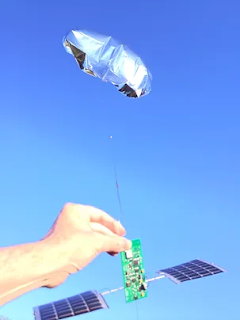
Then the "pico" payloads started happening. Literally a long cracker-sized circuit board that could transmit on very-low power on HF frequencies using APRS or a mode called "WSPR" ("whisper") and these used large mylar party balloons to go into the jet-stream. There were several that have gone around the world MULTIPLE times...see picture.
These were/are harmless experiments that were excellent for highlighting radio propagation using low power. Some have floated over "unfriendly" territory, mostly ignored, and seldom did one cause any issues. Unfortunately those days look to be over.
It appears at least 2 of these "objects" shot down were possibly these amateur radio pico balloons; one over Alaska near the Aleutians and another over Lake Huron.
Unfortunately one "bad apple" has ruined it for those of us who enjoy radio as a way to do exciting and fun things, educating kids and adults alike.
And the ironic thing, that "Chinese Spy Balloon" quite possibly WAS accidental! My hypothesis is that China lost control of the balloon and could not cut it down or command the balloon to raise/lower altitude in order to steer AWAY from the US. China might be ballsy but I don't think they're that crazy to actually send a LARGE WHITE AND COMPLETELY VISIBLE BALLOON all the way from CHINA, to catch a jet stream wave and MAYBE go over the US mainland to SPY. That's not "SPYING".....It may have had "listening equipment" but it might also have simply been communications equipment, essentially a high-altitude "repeater" in order to communicate with people in remote parts of China, either for military or commercial/civilian purposes. Not everything sent from China has to be attributed to espionage, does it?
Something else to consider, when you're floating at 65k feet altitude, the temperatures are down to around -70F to -100F, so it's possible the equipment froze up and stopped responding to ground commands. We had some amateur radio payloads stop functioning until they got closer to the ground and warmed up.
I could be wrong as well. But there's nothing to discount these possibilities either.
On a personal level, Tim Berry is one of those you should be privileged to know and lucky to have on your side when you need someone to lean on for technical expertise or just a friendly ear.
Not only is Tim a ham operator, he's an Engineer for radio stations, Technical Director for the Vol Network, and owner of several repeaters in East Tennessee.
In this interview he talks about his early start in radio and electronics, his recent fight with cancer, and his fundraising to restore a tower site knocked down from recent storms.
The interview (and Tim) are an inspiring message that truly Anything is Possible!
I posted this nearly a decade ago, still holds true today...
I have to wonder if this type of conversation happens on your area's repeaters (the exact conversation and names have been altered to protect the guilty):
Ham1: "Hey guys, I'm from out-of-town and need directions to the gas station as I'm on fumes. I'm currently at (any location). Can anyone tell me how best to get there?"
Ham2: "Sure thing, stay on the interstate to the next exit, follow the highway about 3 miles, and then hang a left at the stop light."
Ham3: "Yeah, but if he takes the bypass he'll cut about 7 minutes off his commute, then go to the off-ramp past the "Y", hang a right, and he's there by the Post Office."
Ham4: "Hey everyone, I was just 'copying the mail' and wanted to let you know that the Post Office is now a Dollar General store, and the bypass has construction so (Ham1)'s directions are better, at least until December when they finish the construction."
Ham5: "Hey, I think your radio's got too much static (never mentions who...), you need to boost yer power or move to a better location."
Ham6: "I just checked with Google Maps and it says there's at least 3 stop lights before you get to the Post Office to make the turn."
Ham4: "I just said the Post Office is no longer there, it's a Dollar General!"
Ham5: "I still think needs to move his radio, still a lotta static."
Ham4: "Who does?"
Ham5: "Yes."
Ham3: (After a looooong period of silence) "Didn't (Another ham) used to work for that Post Office branch some years ago?"
Ham6: "No you're thinking of (Yet ANOTHER ham) who worked at the one by the Walmart near downtown."
Ham3: "Well, he worked for that Post Office branch too, didn't he?"
Ham6: I dunno about that. What were we talking about again?"
Ham4: "I was trying to tell you that the Post Office is now a Dollar General, and the Walmart is near the mall, not downtown."
Ham5: "Your signal's not getting better try a different radio if you have one."
Ham2 & Ham4: (doubling) "(Callsigns) clear!"
Ham1: (after another long period of silence) "Thanks, guys, but my GPS got me there 5 minutes ago and you all quick-keyed so fast I couldn't get a word in edge-wise, and by the way it's at the 2nd stop light past the McDonald's. There's no Walmart, Dollar General, or Post Office in sight. I think you all are off your rockers. Thanks for the comedy routine, this is (callsign) clear."
Ham5: "I heard that same static on his radio as I did that other station (still never mentions who), and in fact several of you had that noisy signal, so maybe it's the repeater. Can't be my radio."
From many Twitter accounts, however, it looks like COVID may be alive and well in whatever variant that it's currently undertaking.
A search on Twitter using tags "hamvention" and "covid" yield several tweets of Hamvention® attendees that subsequently tested positive for COVID upon their return home.
Most attendees that tested positive are reporting mainly fatigue and cold symptoms. Being an international event, several attendees from outside the US also reported testing positive.
My son VA3LML has tested positive also. I tested negative but haven't felt great. That 4th shot doing its work I'm guessing.
It is not known how many of these attendees were vaccinated, boostered, etc.
Hamvention®'s statement prior to the event about COVID was mainly that they were "monitoring events closely" and going by the state and local guidelines, and that they didn't anticipate the State of Ohio cancelling large events. They also stated COVID testing was not planned and recommended masks.
However, from some accounts, masks were a rare sight amongst the 31k in attendance, although some accounts say mask wearing was more noticeable indoors than outside.:
Outside almost everyone without masks. Inside maybe 1-3% masked. Heard there was a Covid outbreak and some think it started with the contest dinner which was packed.
Some commented they chose to stay home, as they were positive before the event or still uncertain about the possibility of catching the virus.
Never been, but've always wanted to. Usually no money, or time.
This year, I had plenty of both - could've gone, w/ plenty of cash on hand for the flea market.
But I see nearly everybody behaving as if Covid is over. Not mingling with a crowd of smart, unwise people.
Uff-da.
— Kelvin - n0mql - EN35ld (@kelvin0mql) May 27, 2022
Various accounts are reporting 50-100+ attendees, and will probably climb as the 2-week gestation is still ongoing, still it's a remarkably low number (of those that are posting) considering the number of attendees after a 2-year hiatus.
Checking some of the groups on Facebook have not yielded many users reporting contracting COVID. Any reports on social media are still basically hearsay and at this point it may be near-impossible to gauge/track actual numbers.
Again the numbers are so low that it's almost like comparing the infection rates to that of the common cold, or any other virus that made headlines in the last 20 years pre-COVID.
Considering the past two years of COVID cancellations of many events across the realm of sports, entertainment, and conventions, the Hamvention® was another event that had to occur to get this world back to a sense of normalcy. Is it any more or a risk than the Super Bowl Big Game, Vegas/Orlando conventions, or the NBA and Stanley Cup playoffs with multiple games in sold-out arenas?
By now we've all been educated on how to prevent catching the virus, with hand sanitizer, masks, and vaccinating ourselves. While we cannot guarantee we'll never get sick, we should continue to take precautions against ANY virus.
Common sense against the common cold would dictate good hygiene practices in daily life such as washing your hands, wearing a mask when required/recommended, and getting flu shots and the necessary vaccinations will prevent the spread of most any disease along with COVID.
The Amateur Radio on the International Space Station (ARISS) team is supporting slow-scan TV transmissions from the International Space Station over the holidays.
The images will be related to lunar exploration.
Transmissions are available worldwide on 145.800MHz FM, using SSTV mode PD120, and started on 26 December 2021and will end on the 31st at about 1705UTC.
The signal should be receivable on a handheld transceiver with a quarter-wave whip antenna. I was able to pick up the signals with my 2m ham radio and using my Android smartphone with the "Robot36" app from the Google Play store
Apple Store has an SSTV app here
During the pass the first few moments were not captured due to noise. Due in part to the terrain at my location (big oak tree to the southwest blocked the signal and there is rain in the area) but overall the image did look pretty good for what I was using. It's possible to use a handheld radio or even an SDR so long as you have a good path to the ISS with little obstructions.
For more information, go to ariss-sstv.blogspot.com.
Source of information via Radio Society of Great Britain
Website used to track ISS: N2YO.com
This is Crystal, and she has been our cat for 15 years. She came to us from the neighbors who were making her an outdoor cat, and she kept "invading" our home.
We adopted her and kept her indoors and she would still love to go in and out at her leisure and cruise the neighborhood. Some crazy cat lady apparently would feed her when she wandered down to her house and we didn't know this and couldn't figure out why she'd come home to eat then throw it up! Only when we were leaving to go on errands and saw her at the cat lady's house did crazy cat lady confess she thought she was a stray (even with a COLLAR???) and was feeding her...
She was loud, noisy, annoying, always hungry (only to throw it up!) and independent. She had a damned attitude about everything and everyone. She would also find time to be affectionate and loving and allowing you her undivided attention. Usually when she was hungry...
I found this damned cat annoying. I kept remarking how I was gonna kill this damned cat if she wouldn't get out of my way, shut up, etc....
Saturday at 5:45 PM, we said goodbye. I've been taking it harder than I ever thought I would. I've attended family funerals and not lost my composure as much as I have with my animals when I've had to make "that decision". 2 dogs and now her. I'm not a cat person. Didn't think it'd hit me as bad as it has.
She had lung cancer and was having trouble breathing. I thought we'd have a week or so but only had 72 hours to spend.
As usual, she didn't want much anything to do with me, probably from having to take her to the vet. But in those last moments, she put her paw on me as if to say it was okay.
We're all hurting, but life will go on. Both kids have their own cats. But they had Crystal first, and they were reminded (like we all were) not to take our pets for granted.
Give your fur babies an extra treat and a hug. You never know when it will be the last time you get that opportunity.
Last Sunday, Jes and I hiked the 7 mile road to Clingman's Dome, then trekked the 1/2 mile up to the Dome from the parking area.
We're both still sore from the journey but feel very accomplished and it was a beautiful day and could not have asked for a better time (other than the sore feet/back/knees...)